Jaimini · Iṣṭa Devatā · 15 min read
Your Iṣṭa Devatā comes from the 12th house from your kārakāṁśa. Rāśi dṛṣṭi, the seven or eight kāraka scheme and the chart you read it in can each change the answer, and most people are never told about any of them.
Many people on Reddit and everywhere else have been asking how to find their Iṣṭa Devatā, and the answer they get is usually three lines long. Find your Ātmakāraka, see which navāṁśa it is in, and the planet in the 12th from there is your deity.
That is correct as far as it goes, but there is much more to it. When that 12th is empty, the actual rāśi dṛṣṭi is considered before the lord, and most people skip it. Depending on the seven or eight kāraka scheme you can get a different Ātmakāraka, and so a different deity. And the same thing happens again in the D20, which is the chart Parāśara himself gives for worship.
Run the usual method on Śrī Rāmakṛṣṇa Paramahaṁsa, the priest of the Kālī temple at Dakṣiṇeśvar, and it gives you Śiva. Run it in the D20 and the Mother comes out. I have worked both below, with the ślokas.
How to find your Iṣṭa Devatā
Find your Ātmakāraka, the graha with the most degrees in its sign. Find the sign it occupies in the D20 chart; that sign is your kārakāṁśa. Look at the 12th house from it. A graha sitting there names your deity. If the house is empty, the grahas aspecting it by rāśi dṛṣṭi decide, and only if there are none, its lord.
If you just want your answer, the Iṣṭa Devatā calculator does all of this for your chart, in the navāṁśa or in the D20.
What the Iṣṭa Devatā is
Iṣṭa Devatā is the form of God that takes you to liberation. Parāśara calls the Ātmakāraka the lord of the native and compares it to the king of a country, and the 12th house from where this king sits is vyaya, the house of loss and of mokṣa. That is why the deity of mokṣa is seen from there.
Both Jaimini and Parāśara talk about this 12th just before they give the deities. Benefics there give good worlds after death. Ketu there, with benefics joining or aspecting it, gives mukti, especially when that 12th is Aries or Sagittarius. Malefics there give the opposite.
Step one: your Ātmakāraka, with seven or eight kārakas
The Ātmakāraka is the graha that has travelled the most degrees in its sign, whichever sign it is in. Parāśara opens his chapter on the kārakas with two schemes: seven grahas, the Sun to Saturn, or eight, ending with Rāhu.
अथाऽहं सम्प्रवक्ष्यामि ग्रहानात्मादिकारकान् ।
सप्तरव्यादिशन्यन्तान् राह्वन्तान् वाऽष्ट संख्यकान् ॥१॥
विलोमगमनाद्राहोरंशाः शोध्याः खवह्नितः ॥५॥ athā’haṃ sampravakṣyāmi grahān ātmādikārakān |
sapta ravyādiśanyantān rāhvantān vā’ṣṭa saṃkhyakān ||1||
vilomagamanād rāhor aṃśāḥ śodhyāḥ khavahnitaḥ ||5||“Now I shall tell you the grahas that are the Ātma and the other kārakas: seven, from the Sun to Saturn, or eight, ending with Rāhu. … Since Rāhu moves backwards, his degrees are subtracted from thirty.”
Bṛhat Parāśara Horā Śāstra 32.1 and 32.5 · Santhanam edition
Rāhu moves backwards, so his degrees are counted from the end of the sign. Rāhu at 2° of a sign counts as 28°, and then he is usually the Ātmakāraka. Parāśara also mentions that some bring Rāhu in only when two grahas tie on degrees, while others always count eight.
I count eight, with Rāhu. But depending on the seven or the eight kāraka scheme you can have a different Ātmakāraka, and that gives you a different angle on your deity. In Śrī Rāmakṛṣṇa’s chart, with eight kārakas, Rāhu at 2°55′ Taurus counts as 27°05′ and he is the Ātmakāraka. With seven, it is Mars at 22°17′ Capricorn, ahead of the Moon at 22°16′ Aquarius by about a minute of arc.
Step two: the kārakāṁśa, and why I go with the D20
The kārakāṁśa is the sign your Ātmakāraka occupies in a divisional chart. Most of us were taught to take it from the navāṁśa. But kārakāṁśa only means the aṁśa of the kāraka, and aṁśa only means a division. Which division? At the start of his chapter on the vargas, Parāśara tells you what each one is for.
नवमांशे कलत्राणां दशमांशे महत्फलम् ।
द्वादशांशे तथा पित्रोश्चिन्तनं षोडशांशके ॥३॥
सुखाऽसुखस्य विज्ञानं वाहनानां तथैव च ।
उपासनाया विज्ञानं साध्यं विंशतिभागके ॥४॥navamāṃśe kalatrāṇāṃ daśamāṃśe mahatphalam |
dvādaśāṃśe tathā pitroś cintanaṃ ṣoḍaśāṃśake ||3||
sukhā’sukhasya vijñānaṃ vāhanānāṃ tathaiva ca |
upāsanāyā vijñānaṃ sādhyaṃ viṃśatibhāgake ||4||“In the navāṁśa, the spouse; in the daśāṁśa, the great results; in the dvādaśāṁśa, the parents; in the ṣoḍaśāṁśa, happiness and unhappiness, and vehicles. Knowledge of upāsanā is to be had from the twentieth division.”
Bṛhat Parāśara Horā Śāstra 7.3–4 · Santhanam edition
The navāṁśa is for the spouse, and upāsanā, your worship, is seen from the twentieth division. So when the question is which form of God you will worship and be liberated through, my stance is to go with the D20, always. I am not the first to say this, and you don’t need to take it from me, because it is Parāśara’s own line.
I do like the D9, but even for myself I don’t see it working out that well here. In my navāṁśa, Mars sits in the 12th from my kārakāṁśa, so the deity comes out to be Skanda, and I have never worshipped him.
Step three: the 12th house, and rāśi dṛṣṭi
Now count the 12th house from your kārakāṁśa in that chart. If a graha sits there, it names your deity. If several sit there, the strongest decides: first by dignity in that chart (exalted, then own sign, with debilitated last), then by the most degrees in the sign.
If the 12th is empty, most people go straight to its lord, and that skips a step. Before the lord you have to see which grahas aspect that house by rāśi dṛṣṭi, the aspect of the signs. This is given in Bṛhat Parāśara Horā Śāstra itself, in the chapter on the aspects of the signs.
यथा चरः स्थिरानेवं स्थिरः पश्यति वै चरान् ॥२॥
द्विस्वभावो विनाऽऽत्मानं द्विस्वभावान् प्रपश्यति ।
समीपस्थं परित्यज्य खेटास्तत्र गतास्तथा ॥३॥yathā caraḥ sthirān evaṃ sthiraḥ paśyati vai carān ||2||
dvisvabhāvo vinā”tmānaṃ dvisvabhāvān prapaśyati |
samīpasthaṃ parityajya kheṭās tatra gatās tathā ||3||“As a movable sign aspects the fixed signs, so a fixed sign aspects the movable ones. A dual sign aspects the dual signs, other than itself. Leave out the sign next to it. The grahas placed in a sign aspect in the same way.”
Bṛhat Parāśara Horā Śāstra 8.2–3 · Santhanam edition
Jaimini opens his Upadeśa Sūtras with the same rule.
अभिपश्यंति ऋक्षाणि ॥२॥
पार्श्वभे च ॥३॥
तन्निष्ठाश्च तद्वत् ॥४॥abhipaśyanti ṛkṣāṇi ||2||
pārśvabhe ca ||3||
tanniṣṭhāś ca tadvat ||4||“The signs aspect one another, leaving out the sign beside each. The grahas standing in them aspect the same way.”
Jaimini, Upadeśa Sūtra 1.1.2–4 · 1955 edition
So a movable sign aspects the three fixed signs except the one next to it, a fixed sign aspects the three movable signs except the one next to it, and the dual signs aspect each other. The aspect works both ways. Find your 12th in the table.
| Your 12th from the kārakāṁśa | Aspected by grahas in |
|---|---|
| Aries | Leo, Scorpio, Aquarius |
| Taurus | Cancer, Libra, Capricorn |
| Gemini | Virgo, Sagittarius, Pisces |
| Cancer | Taurus, Scorpio, Aquarius |
| Leo | Aries, Libra, Capricorn |
| Virgo | Gemini, Sagittarius, Pisces |
| Libra | Taurus, Leo, Aquarius |
| Scorpio | Aries, Cancer, Capricorn |
| Sagittarius | Gemini, Virgo, Pisces |
| Capricorn | Taurus, Leo, Scorpio |
| Aquarius | Aries, Cancer, Libra |
| Pisces | Gemini, Virgo, Sagittarius |
Only when no graha occupies or aspects the 12th do you take its lord.
My own D20 shows why this matters. There my kārakāṁśa is Scorpio, so the 12th is Libra, and nothing sits in Libra. Going straight to the lord, Venus, you would tell me Lakṣmī. But Libra is aspected by rāśi dṛṣṭi from Taurus, where my Jupiter sits, so the answer comes from the aspect before it ever reaches Venus.
When Rāhu is your Ātmakāraka
Parāśara takes Rāhu’s degrees in reverse because he moves in reverse; that is the vilomagamanād rāhoḥ line quoted above. In the D20 I count the houses from him in reverse too. So when Rāhu is your Ātmakāraka, the 12th from your kārakāṁśa, counted backwards, is the sign that comes after his in the zodiac. The calculator does this for you in its D20 setting.
The deities: what Jaimini and Parāśara say
Jaimini gives the list in eight short sūtras, right after his sūtras on the 12th from the kārakāṁśa.
रविकेतुभ्यां शिवे भक्तिः ॥७२॥
चन्द्रेण गौर्याम् ॥७३॥
शुक्रेण लक्ष्म्याम् ॥७४॥
कुजेन स्कन्दे ॥७५॥
बुधशनिभ्यां विष्णौ ॥७६॥
गुरुणा साम्बशिवे ॥७७॥
राहुणा तामस्यां दुर्गायां च ॥७८॥
केतुना गणेशे स्कन्दे च ॥७९॥ravi-ketubhyāṃ śive bhaktiḥ ||72||
candreṇa gauryām ||73||
śukreṇa lakṣmyām ||74||
kujena skande ||75||
budha-śanibhyāṃ viṣṇau ||76||
guruṇā sāmbaśive ||77||
rāhuṇā tāmasyāṃ durgāyāṃ ca ||78||
ketunā gaṇeśe skande ca ||79||“With the Sun and Ketu, devotion to Śiva. With the Moon, to Gaurī. With Venus, to Lakṣmī. With Mars, to Skanda. With Mercury and Saturn, to Viṣṇu. With Jupiter, to Sāmba Śiva. With Rāhu, to the tāmasī and to Durgā. With Ketu, to Gaṇeśa and to Skanda.”
Jaimini, Upadeśa Sūtra 1.2.72–79 · 1955 edition
Parāśara gives the same deities in his chapter on the effects of the kārakāṁśa. He builds each verse on Ketu, the graha of mokṣa, standing in that 12th, joined by another graha, and the graha with Ketu names the deity.
रविणा संयुते केतौ कारकांशाद् व्ययस्थिते ।
शिवभक्तिर्भवेत्तस्य निर्विशंकं द्विजोत्तम ॥६८॥
चन्द्रेण संयुते केतौ कारकांशाद् व्ययस्थिते ।
गौर्यां भक्तिर्भवेत्तस्य शाक्तिको जायते नरः ॥६९॥
शुक्रेण संयुते केतौ कारकांशाद् व्ययस्थिते ।
लक्ष्म्यां सञ्जायते भक्तिर्जातकोऽसौ समृद्धिमान् ॥७०॥
कुजेन संयुते केतौ स्कन्दभक्तो भवेन्नरः ।
वैष्णवो बुधसौरिभ्यां गुरुणा शिवभक्तिमान् ॥७१॥
राहुणा तामसीं दुर्गां सेवते क्षुद्रदेवताम् ।
भक्तिः स्कन्देऽथ हेरम्बे शिखिना केवलेन वा ॥७२॥raviṇā saṃyute ketau kārakāṃśād vyayasthite |
śivabhaktir bhavet tasya nirviśaṃkaṃ dvijottama ||68||
candreṇa saṃyute ketau kārakāṃśād vyayasthite |
gauryāṃ bhaktir bhavet tasya śāktiko jāyate naraḥ ||69||
śukreṇa saṃyute ketau kārakāṃśād vyayasthite |
lakṣmyāṃ sañjāyate bhaktir jātako ‘sau samṛddhimān ||70||
kujena saṃyute ketau skandabhakto bhaven naraḥ |
vaiṣṇavo budhasauribhyāṃ guruṇā śivabhaktimān ||71||
rāhuṇā tāmasīṃ durgāṃ sevate kṣudradevatām |
bhaktiḥ skande ‘tha herambe śikhinā kevalena vā ||72||“When Ketu stands in the 12th from the kārakāṁśa joined by the Sun, there is devotion to Śiva, without a doubt, O best of the twice-born. Joined by the Moon, devotion to Gaurī, and the man becomes a Śākta. Joined by Venus, devotion to Lakṣmī, and he prospers. Joined by Mars, the man is a devotee of Skanda. With Mercury and Saturn, a Vaiṣṇava; with Jupiter, a devotee of Śiva. With Rāhu he serves the tāmasī Durgā, or lesser deities. With Ketu alone, devotion to Skanda or to Heramba.”
Bṛhat Parāśara Horā Śāstra 33.68–72 · Santhanam edition
In practice the deity comes from whichever graha decides that 12th, Ketu or no Ketu. Sāmba Śiva is Śiva together with Ambā, the Mother. The avatāra column is Parāśara’s own list of the avatāras born of the grahas.
| Graha deciding the 12th | Jaimini | Parāśara | Avatāra |
|---|---|---|---|
| Sun | Śiva (with Ketu) | Śiva (one edition reads the Sun himself) | Rāma |
| Moon | Gaurī | Gaurī, and he becomes a Śākta | Kṛṣṇa |
| Mars | Skanda | Skanda | Narasiṁha |
| Mercury | Viṣṇu | a Vaiṣṇava | Buddha |
| Jupiter | Sāmba Śiva | Śiva | Vāmana |
| Venus | Lakṣmī | Lakṣmī, with prosperity | Paraśurāma |
| Saturn | Viṣṇu | a Vaiṣṇava | Kūrma |
| Rāhu | the tāmasī, and Durgā | the tāmasī Durgā, or lesser deities | Varāha |
| Ketu | Gaṇeśa and Skanda | alone: Skanda or Heramba | Matsya |
Śrī Rāmakṛṣṇa’s chart, four ways
Śrī Rāmakṛṣṇa Paramahaṁsa was born on 18 February 1836 at Kāmārpukur, at about 6:23 in the morning by the time most published charts use. He served as priest at the Kālī temple at Dakṣiṇeśvar, and the Mother he worshipped there was his whole life. Here is his chart through every combination of the steps above.
| Chart | Eight kārakas: Ātmakāraka Rāhu | Seven kārakas: Ātmakāraka Mars |
|---|---|---|
| D9 | The Sun alone sits in the 12th: Śiva | The 12th is empty and the Sun aspects it by rāśi dṛṣṭi: Śiva. Skip rāśi dṛṣṭi and its lord, Mercury, would give you Viṣṇu |
| D20 | Counted backwards from Rāhu, the 12th is Aquarius, with the Moon and Venus in it. The Moon decides: Gaurī | Jupiter sits in the 12th: Sāmba Śiva, Śiva with the Mother |
Whichever kāraka scheme you use, the navāṁśa gives Śiva and the D20 brings in the Mother. Astrologers who run his chart the usual way get Śiva, or Rāma for the Sun, and are left explaining why he worshipped Kālī.
With eight kārakas, which is what I use, the D20 puts the Moon and Venus in his 12th, and the Moon decides: Gaurī, the Mother. Parāśara’s verse that gives the Moon to Gaurī ends with śāktiko jāyate naraḥ, the man becomes a Śākta. That sign, Aquarius, belongs to Saturn and Rāhu, and Jaimini gives Rāhu to the tāmasī and to Durgā. So the Mother, sitting in a sign that Saturn and Rāhu own, is how I read Kālī here. That last step is my own reading; no verse says it in so many words.
How to worship your Iṣṭa Devatā
Once you know the deity, start simple. The deity’s Sahasranāma or Aṣṭottaraśatanāma, or any stotra from the śāstra, needs no initiation. Neither does a nāma mantra like Śrī Lakṣmyai namaḥ, as long as you don’t add a bīja to it. For Viṣṇu, the Viṣṇu Sahasranāma is the obvious place to begin.
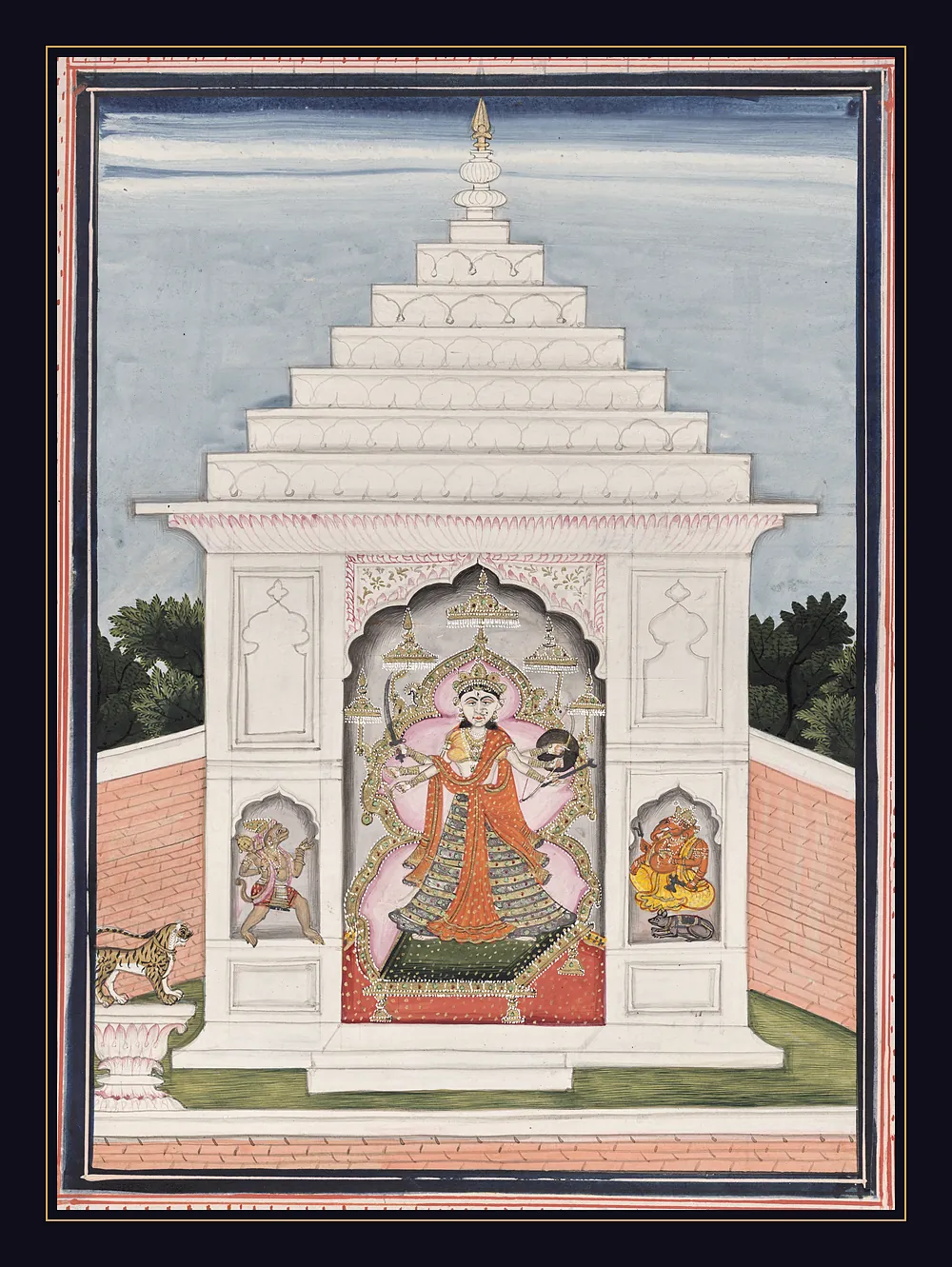
The bīja mantras are another matter, and so are the ugra forms like Kālī, Bagalāmukhī or Pratyaṅgirā. These need dīkṣā from a guru. Go with the saumya form first.
If your chart gives you a fierce form, don’t go searching the internet for her bīja mantra. Start with her names and her stotras. Taking up the ugra forms casually, without a guru, will cause certain issues, and the saumya form of the same deity is always open to you.
Questions people ask
My 12th from the kārakāṁśa is empty. What now?
Check which grahas aspect it by rāśi dṛṣṭi, using the table above. If there are several, the strongest decides. Only when nothing occupies or aspects it do you go to the lord.
Should I use seven kārakas or eight?
I use eight, with Rāhu. If you follow seven, run your chart both ways in the Ātmakāraka calculator. When the Ātmakāraka changes you get two deities, and the chart is showing you two angles on your path.
Can I have more than one Iṣṭa Devatā?
The strongest graha on the 12th from your kārakāṁśa gives the Iṣṭa Devatā. Parāśara also says to judge the 6th house from your Amātyakāraka in the same way, and that gives you a second deity, the one many call the pālana devatā, who looks after you in this life.
Do I need an exact birth time?
Less than for most things, because the lagna does not come into it. What matters is your Ātmakāraka’s degree. A D20 division is only 1°30′ wide, though, so if your Ātmakāraka is the Moon, or sits near the edge of a division, a different birth time can change the answer. The calculator checks fifteen minutes either side and tells you if the deity changes.
Sources: Bṛhat Parāśara Horā Śāstra 2.5–7, 7.3–4, 8.2–3, 32.1–7 and 33.64–74, Sanskrit from the Santhanam edition with obvious printing errors corrected, checked against the Chaukhamba edition with the Sudhā commentary. Jaimini, Upadeśa Sūtra 1.1.2–4 and 1.2.68–79, from the 1955 edition. Charts computed with True Citrapakṣa ayanāṁśa and the mean node. Images: Cleveland Museum of Art 2018.112 and 2020.80, CC0; Metropolitan Museum of Art 786756, public domain.