Vimśāṁśa · Navarātri · 6 min read
Navarātri is nine nights of the Goddess, and your D20 chart already tells you which of her forms to sit with. Three placements decide it: the goddess over your lagna, the goddess over the lord of your running daśā, and your Iṣṭa Devatā.
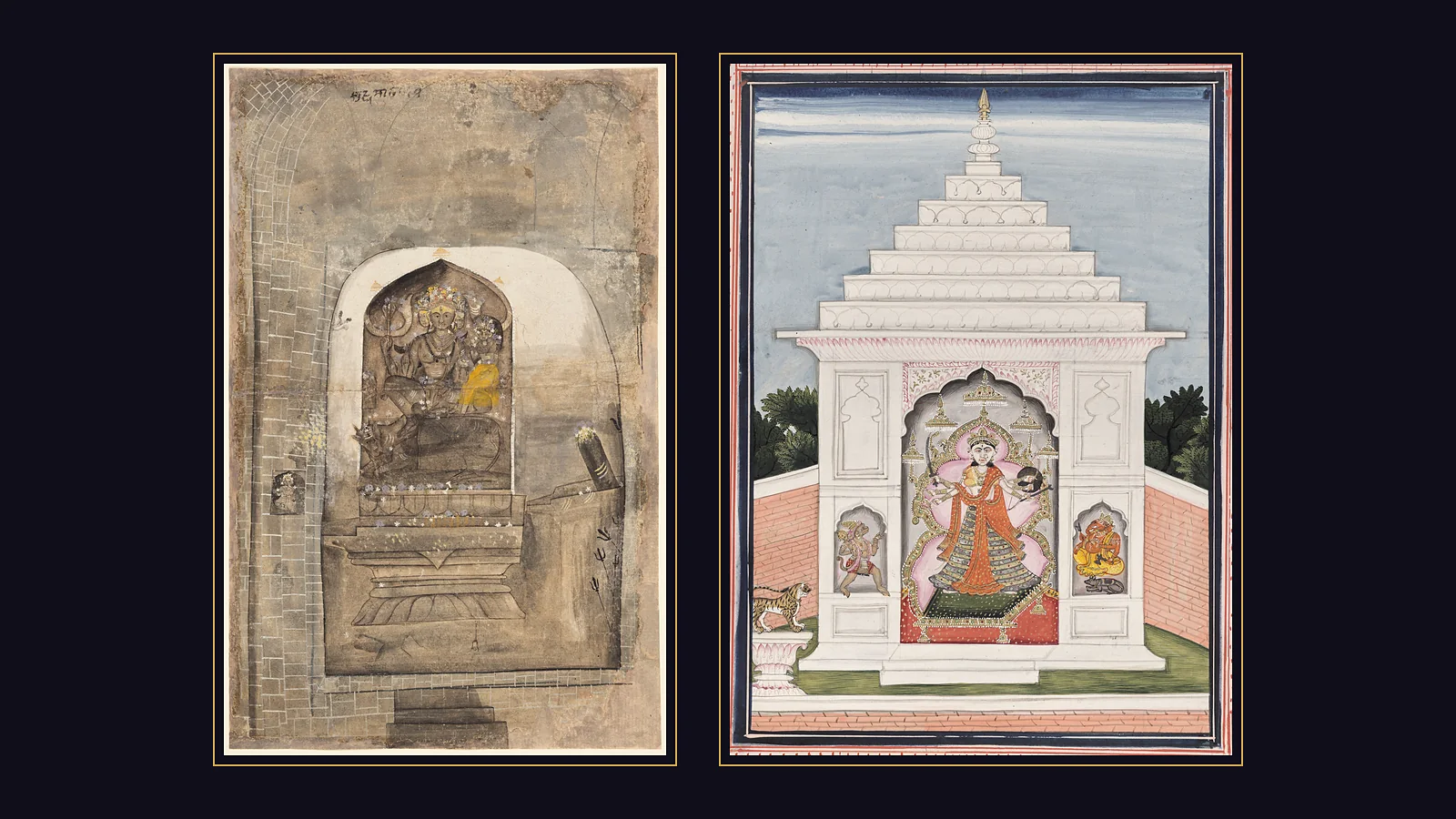
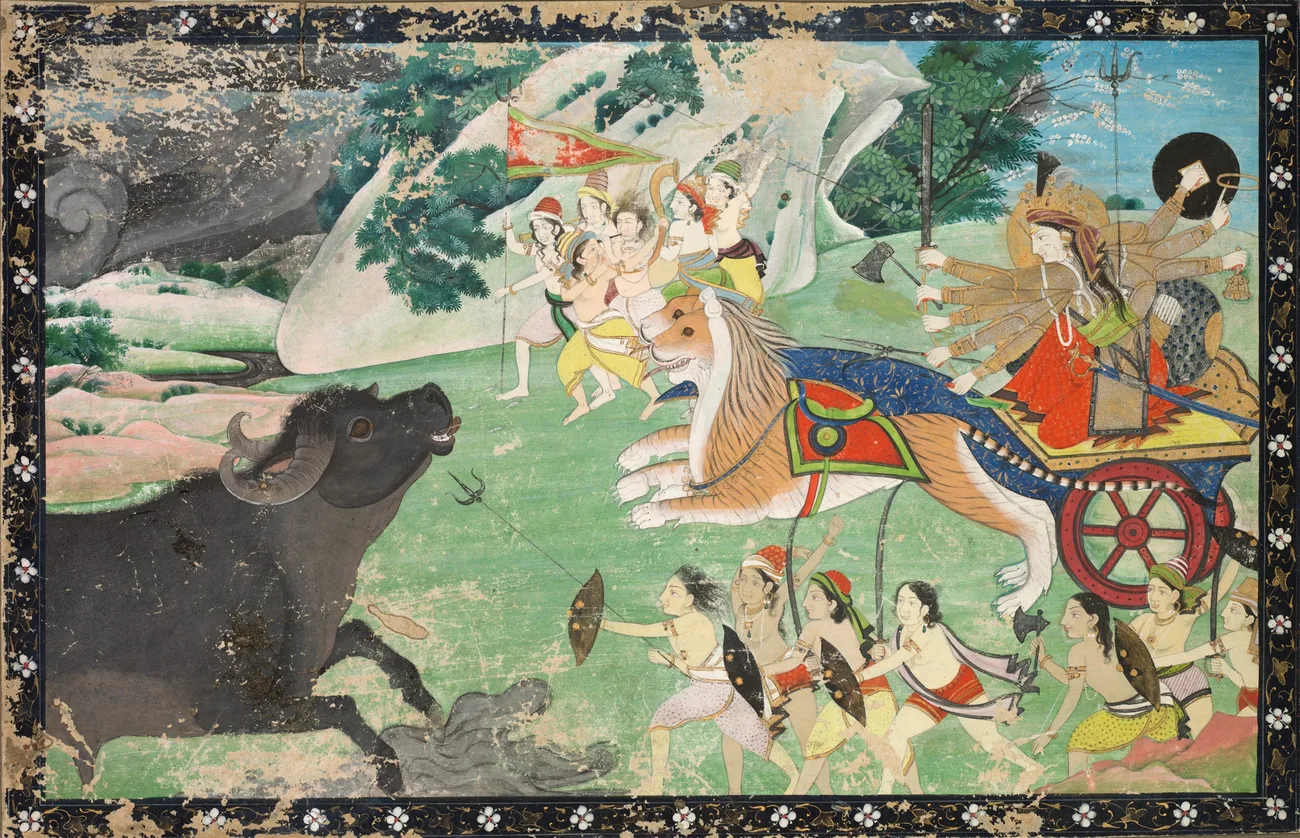
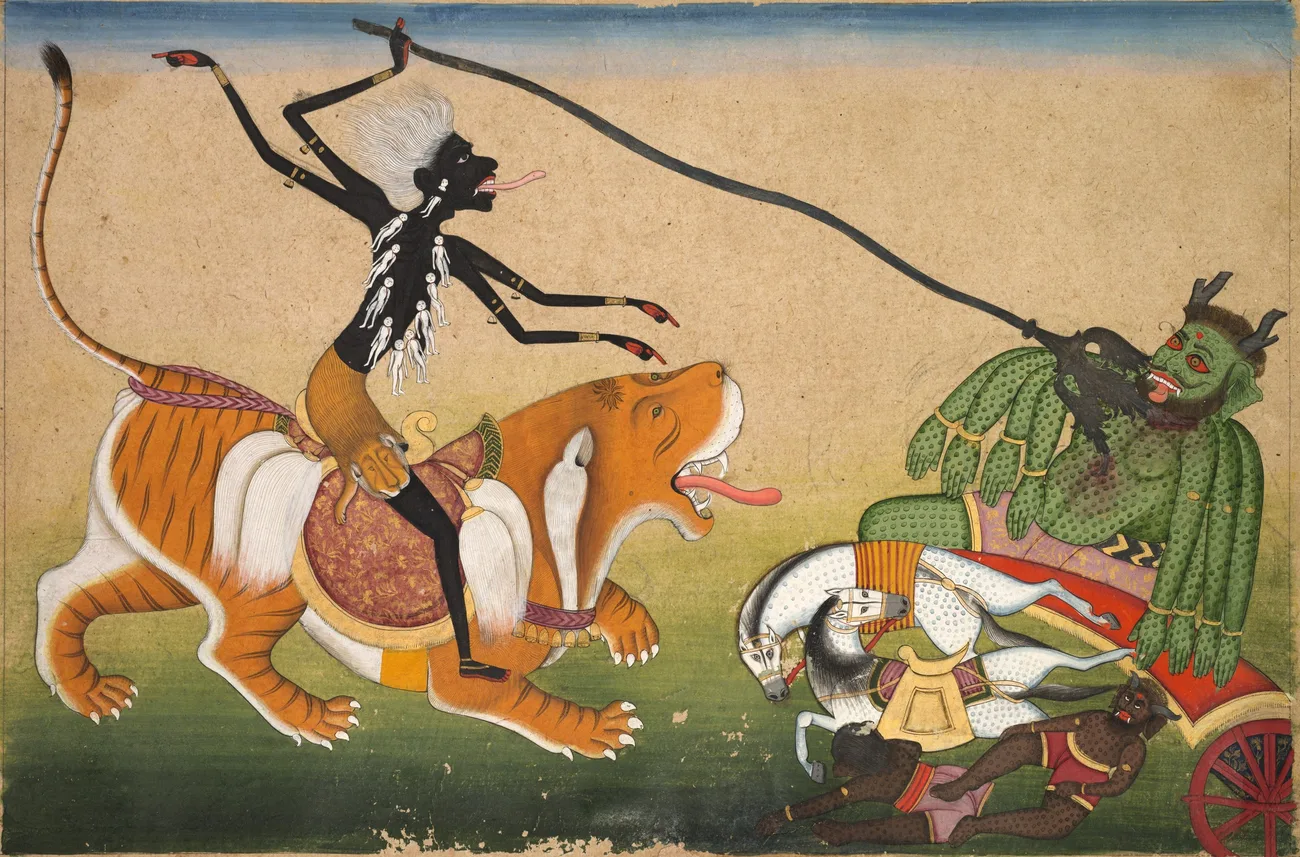
When Mahiṣa had thrown the gods out of heaven, they went to Viṣṇu and Śiva and told them what had happened, and the anger of every god came out of them as light. The light gathered into one body, and that body was the Goddess. Each god then handed her his own weapon. That is the Devī Māhātmya’s story, and it is the story behind Navarātri: one Goddess made of every power, who then shows herself in many forms through the nine nights.
So the real question for you is which of her forms to worship. Parāśara answers it in the vimśāṁśa, the D20 chart, where forty goddesses preside over the twenty aṁśas of the odd and even signs. Find the goddess over your lagna, over your current daśā lord, and your Iṣṭa Devatā from the D20, and worship her these nine nights. The D20 chart calculator gives you the first two in a minute.
This year Śāradīya Navarātri runs from 11 to 20 October 2026, with Vijayadaśamī on the 20th.
Why the D20 is the chart for Navarātri
In his chapter on judging the divisions, Parāśara gives the vimśāṁśa exactly one line:
उपासनाया विज्ञानं साध्यं विंशतिभागके॥
upāsanāyā vijñānaṃ sādhyaṃ viṃśatibhāgake ||
“Knowledge of upāsanā is to be had from the twentieth division.”
Upāsanā is worship, and the goddesses who rule the D20 are the goddesses of Navarātri. All ten Mahāvidyās are in it. Jayā and Vijayā, odd 3 and odd 5, are the two companions who stand beside Durgā. Satī, Gaurī and Bhavānī are Pārvatī in three of her lives. The full list of forty, with the degrees, is in the D20 chart deities.
Step one: the goddess over your lagna
The lagna is you, the body and the life as a whole, so the goddess over it is the one who looks after the whole chart. Put your birth details into the D20 calculator and read the name against the lagna. A name like Chinnaśīrṣā or Ghorā over your lagna is not bad news. The fierce goddesses give as much as the gentle ones, and the name tells you the character of that placement and the practice that will move it.
Step two: the goddess over your daśā lord
Navarātri comes in the middle of whatever daśā you are running, and that planet is the one doing the most in your life right now. See which mahādaśā and antardaśā you are in with the Vimśottarī daśā calculator, then read the goddess over that planet in the D20 calculator. A planet takes on the flavour of the goddess over its aṁśa, and its daśā carries her temper. If your Saturn daśā is hard going and Saturn sits in Kālī’s aṁśa, these nine nights belong to Kālī.
Step three: your Iṣṭa Devatā
Your Iṣṭa Devatā is seen from the 12th house from your Ātmakāraka, and Parāśara’s own line above is why I read it in the D20. The Iṣṭa Devatā calculator does this for you; switch it to the D20 setting. The full method, with the rāśi dṛṣṭi step most people skip, is in how to find your Iṣṭa Devatā.
If the three answers point to different goddesses, the Iṣṭa Devatā is for your whole life, and the daśā lord’s goddess is for the period you are in now. For these nine nights, take the one your situation is asking for.
The goddesses with a full chapter
If your goddess is one of these, her chapter tells you what she does to a planet and in the daśā, and what she asks for.
| Goddess | Aṁśa | Degrees in an odd sign |
|---|---|---|
| Kālī | odd 1 | 0°00′–1°30′ |
| Gaurī | odd 2 | 1°30′–3°00′ |
| Jayā and Vijayā | odd 3, 5 and 18 | 3°00′–4°30′, 6°00′–7°30′, 25°30′–27°00′ |
| Lakṣmī | odd 4 | 4°30′–6°00′ |
| Vimalā | odd 6 | 7°30′–9°00′ |
| Satī | odd 7 | 9°00′–10°30′ |
| Tārā | odd 8 | 10°30′–12°00′ |
| Jvālāmukhī | odd 9 | 12°00′–13°30′ |
The other goddesses are going up one by one in the library.
What to do for the nine nights
Keep it simple and keep it regular. Light a lamp at the same time every evening, sit in front of her picture, and read. The Devī Māhātmya is public and needs no dīkṣā, and it is the Navarātri text for every one of her forms. If your goddess is Lakṣmī, the Śrī Sūkta or the Kanakadhārā Stotra, morning and evening, is her own practice and also needs no dīkṣā. Fast as far as your health allows, and take a saṅkalpa on the first night for what you want from the nine.
The mantras of the Mahāvidyās are a dīkṣā matter and I am not going to print them. If your goddess is Tārā, Chinnamastā, Bagalāmukhī or any of the ten, the mantra comes from a guru. A consultation is the place to work out which practice fits your chart.
This is worship and conduct. It is not a cure for anything. If the trouble is money, pay the debt; if it is health, see the doctor.
Check your birth time first. The goddess changes every 1°30′, and at the lagna that is about six minutes of clock time between one goddess and the next. The D20 calculator shows how far your lagna is from the next aṁśa, so you can see whether a small error in the birth time changes your answer.
Questions people ask
Which goddess should I worship in Navarātri according to my birth chart?
The goddess over your lagna and over your current daśā lord in the D20 chart, and your Iṣṭa Devatā read in the D20. Parāśara assigns the D20 to upāsanā, worship, in Bṛhat Parāśara Horā Śāstra 7.4.
Is my D20 goddess the same as my Iṣṭa Devatā?
Not always. The D20 goddess is the one presiding over a planet’s aṁśa. The Iṣṭa Devatā comes from the 12th house from your Ātmakāraka. They can agree, and when they do, that goddess is the clear answer.
Can I chant my D20 goddess’s mantra during Navarātri?
Not a Mahāvidyā mantra without initiation. Read the Devī Māhātmya, which needs no dīkṣā, and get the mantra from a guru.
When is Navarātri in 2026?
Śāradīya Navarātri runs from 11 to 20 October 2026, with ghaṭasthāpanā on the 11th and Vijayadaśamī on the 20th. Chaitra Navarātri falls in spring.
Sources: Bṛhat Parāśara Horā Śāstra 6.17–21 and 7.4, Santhanam and Chaukhamba editions. Devī Māhātmya, chapter 2. Images: Cleveland Museum of Art, public domain.