Vimśāṁśa series · Part 1 · The D20 chart · 6 min read
The D20 is not only the chart of spirituality, but on a deeper level it will show what exact karmic signature your planet has, which can be known through the deities which are ruling over it. This guide is meant to throw some light on the hidden techniques and on the goddesses kept long hidden in astrology.
What is the Vimśāṁśa?
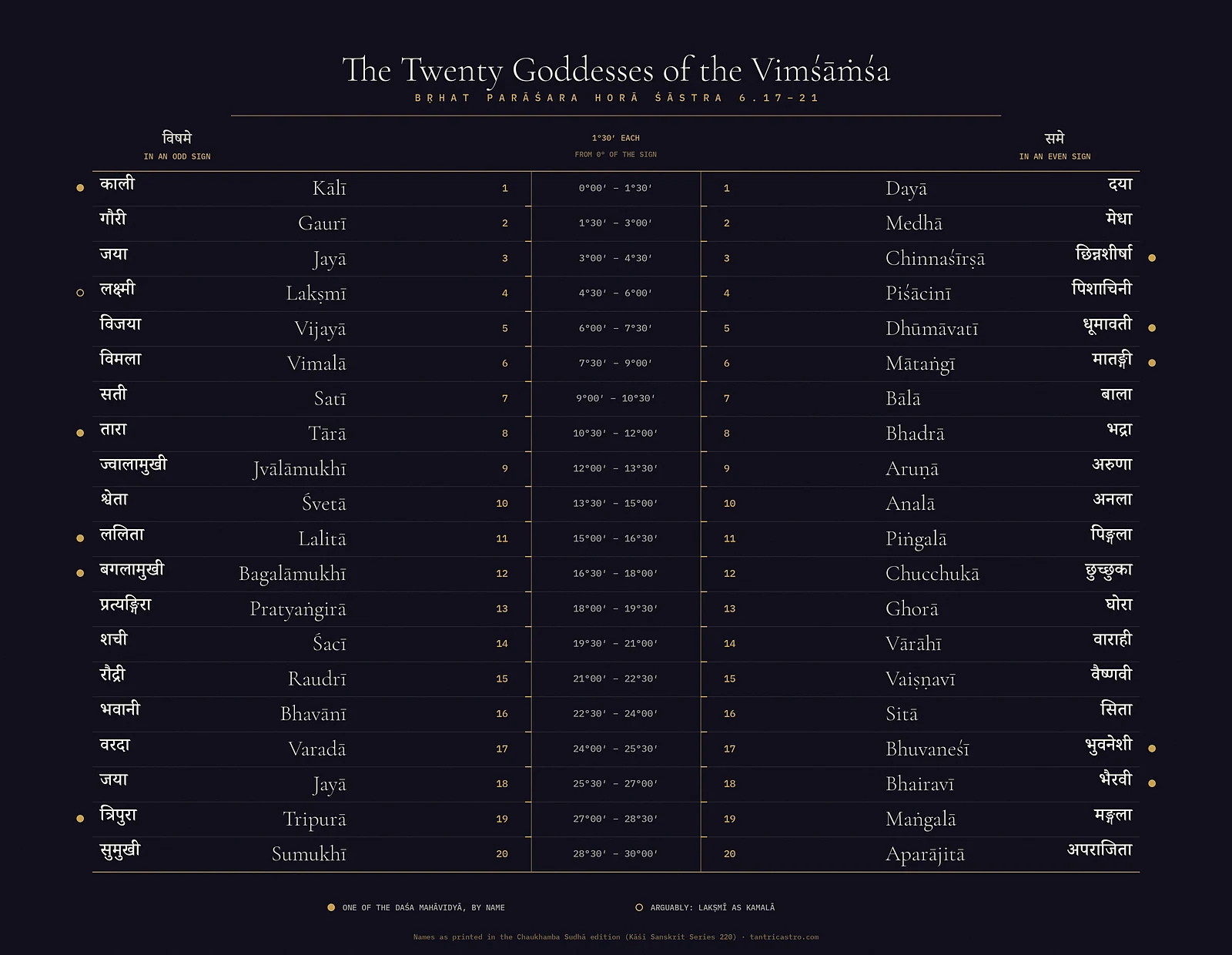
The vimśāṁśa, the D20 chart, divides each sign into twenty aṁśas of 1°30′, and a goddess presides over every aṁśa. There are two tables: odd signs use one set of twenty goddesses, even signs use a different twenty. Parāśara gives the vimśāṁśa exactly one line:
उपासनाया विज्ञानं साध्यं विंशतिभागके॥
upāsanāyā vijñānaṃ sādhyaṃ viṃśatibhāgake ||
“Knowledge of upāsanā is to be had from the twentieth division.”
The secret of the D20 chart
Each of the twenty goddesses rules the aṁśa (specific degrees), and a planet sitting in that aṁśa takes on her flavour. Chinnamastā over your Moon and Bālā over your Moon are two different Moons, and both will have very different levels of predictions based on the same.
Who the twenty goddesses are
Parāśara gives them in four verses. For an odd sign, Aries, Gemini, Leo, Libra, Sagittarius or Aquarius:
काली गौरी जया लक्ष्मीर्विजया विमला सती।
तारा ज्वालामुखी श्वेता ललिता बगलामुखी॥१८॥
प्रत्यङ्गिरा शची रौद्री भवानी वरदा जया।
त्रिपुरा सुमुखी चेति विषमे परिचिन्तयेत्॥१९॥kālī gaurī jayā lakṣmīr vijayā vimalā satī |
tārā jvālāmukhī śvetā lalitā bagalāmukhī ||18||
pratyaṅgirā śacī raudrī bhavānī varadā jayā |
tripurā sumukhī ceti viṣame paricintayet ||19||“Kālī, Gaurī, Jayā, Lakṣmī, Vijayā, Vimalā, Satī, Tārā, Jvālāmukhī, Śvetā, Lalitā, Bagalāmukhī, Pratyaṅgirā, Śacī, Raudrī, Bhavānī, Varadā, Jayā, Tripurā and Sumukhī: so should one reckon them in an odd sign.”
Bṛhat Parāśara Horā Śāstra 6.18–19 · Chaukhamba edition
For an even sign, Taurus, Cancer, Virgo, Scorpio, Capricorn or Pisces:
समराशौ दया मेधा छिन्नशीर्षा पिशाचिनी।
धूमावती च मातङ्गी बाला भद्राऽरुणानला॥२०॥
पिङ्गला छुच्छुका घोरा वाराही वैष्णवी सिता।
भुवनेशी भैरवी च मङ्गला ह्यपराजिता॥२१॥samarāśau dayā medhā chinnaśīrṣā piśācinī |
dhūmāvatī ca mātaṅgī bālā bhadrā’ruṇānalā ||20||
piṅgalā chucchukā ghorā vārāhī vaiṣṇavī sitā |
bhuvaneśī bhairavī ca maṅgalā hyaparājitā ||21||“In an even sign: Dayā, Medhā, Chinnaśīrṣā, Piśācinī, Dhūmāvatī, Mātaṅgī, Bālā, Bhadrā, Aruṇā, Analā, Piṅgalā, Chucchukā, Ghorā, Vārāhī, Vaiṣṇavī, Sitā, Bhuvaneśī, Bhairavī, Maṅgalā and Aparājitā.”
Bṛhat Parāśara Horā Śāstra 6.20–21 · Chaukhamba edition
| # | Degrees | Odd sign | Even sign | Who she is |
|---|---|---|---|---|
| 1 | 0°00′–1°30′ | Kālī | Dayā | Mahāvidyā · compassion |
| 2 | 1°30′–3°00′ | Gaurī | Medhā | Pārvatī the fair · intelligence |
| 3 | 3°00′–4°30′ | Jayā | Chinnaśīrṣā | Devī’s companion · Chinnamastā, Mahāvidyā |
| 4 | 4°30′–6°00′ | Lakṣmī | Piśācinī | Kamalā, Mahāvidyā · the piśāca goddess |
| 5 | 6°00′–7°30′ | Vijayā | Dhūmāvatī | Devī’s companion · the widow, Mahāvidyā |
| 6 | 7°30′–9°00′ | Vimalā | Mātaṅgī | the goddess of Puri · Mahāvidyā |
| 7 | 9°00′–10°30′ | Satī | Bālā | Dakṣa’s daughter · Bālā Tripurasundarī |
| 8 | 10°30′–12°00′ | Tārā | Bhadrā | Mahāvidyā · Bhadrakālī |
| 9 | 12°00′–13°30′ | Jvālāmukhī | Aruṇā | the flame-mouthed Mother · the red one |
| 10 | 13°30′–15°00′ | Śvetā | Analā | the white one · fire |
| 11 | 15°00′–16°30′ | Lalitā | Piṅgalā | Tripurasundarī, Mahāvidyā · the tawny one |
| 12 | 16°30′–18°00′ | Bagalāmukhī | Chucchukā | Mahāvidyā · a rare name, her chapter will take her up |
| 13 | 18°00′–19°30′ | Pratyaṅgirā | Ghorā | the lion-faced goddess of counter-sorcery · the terrible |
| 14 | 19°30′–21°00′ | Śacī | Vārāhī | Indrāṇī, a Mātṛkā · the boar-faced Mātṛkā |
| 15 | 21°00′–22°30′ | Raudrī | Vaiṣṇavī | Māheśvarī, a Mātṛkā · a Mātṛkā |
| 16 | 22°30′–24°00′ | Bhavānī | Sitā | Pārvatī · the white one |
| 17 | 24°00′–25°30′ | Varadā | Bhuvaneśī | the boon-giver · Bhuvaneśvarī, Mahāvidyā |
| 18 | 25°30′–27°00′ | Jayā | Bhairavī | Jayā, the second time · Mahāvidyā |
| 19 | 27°00′–28°30′ | Tripurā | Maṅgalā | Tripurasundarī again · the auspicious one |
| 20 | 28°30′–30°00′ | Sumukhī | Aparājitā | the fair-faced · the unconquered |
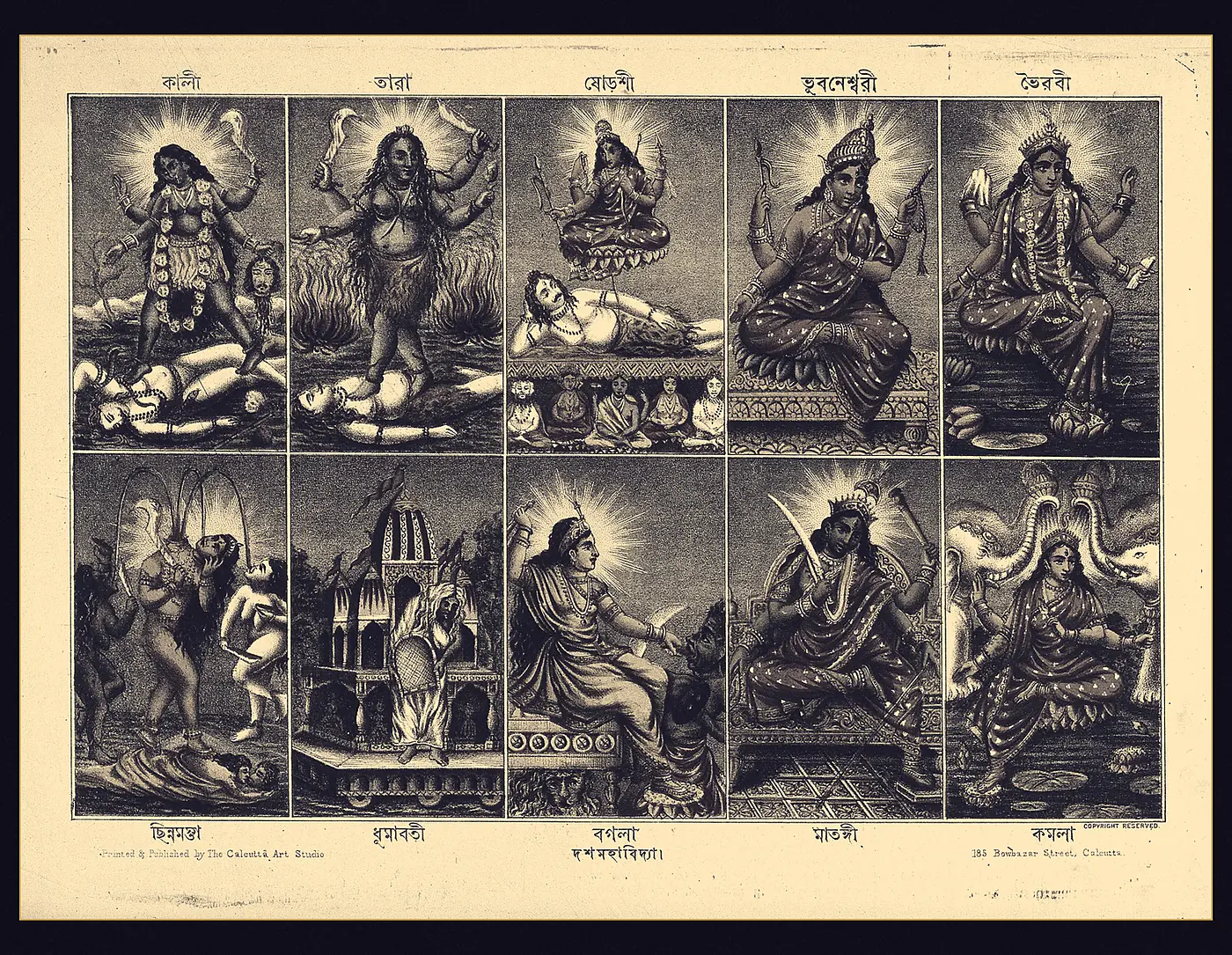
The Daśa Mahāvidyā are in the D20
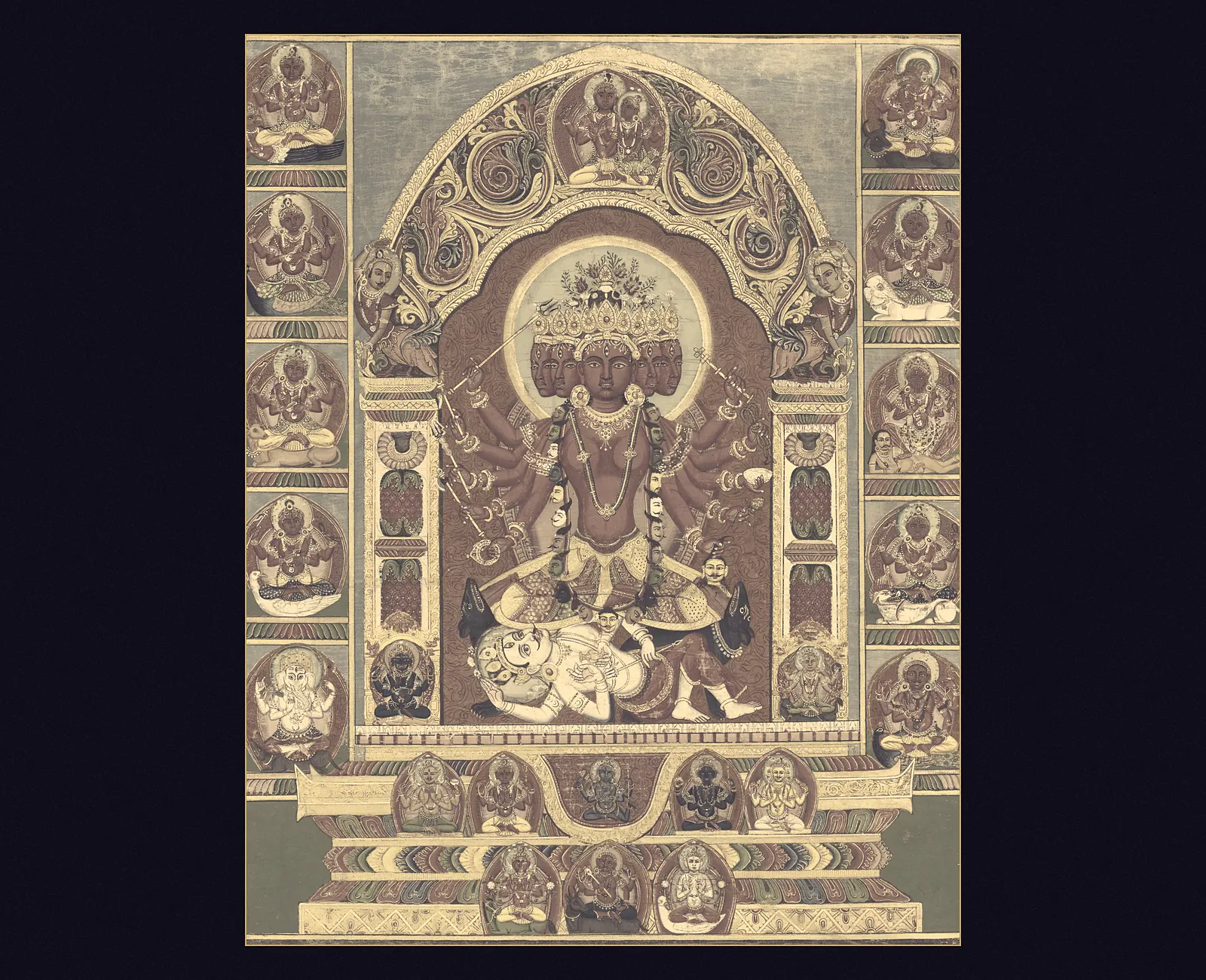
When any sādhak reads through the names, they will realise that Parāśara Ṛṣi has indeed mentioned all the Daśa Mahāvidyās in the D20. They too will have their own characteristics and effects on the planets. Everyone has been given a direct name except Kamalā, who has been named as Lakṣmī.
The two columns
Look at the odd names: Gaurī, Jayā, Vijayā, Vimalā, Satī, Lalitā, Varadā, Tripurā, Sumukhī. Half of them are names out of the Lalitā Sahasranāma, the thousand names of Tripurasundarī, and the odd column is the Śrīcakra, while the other column is more related to Kālī and similar deities’ Sahasranāmas.
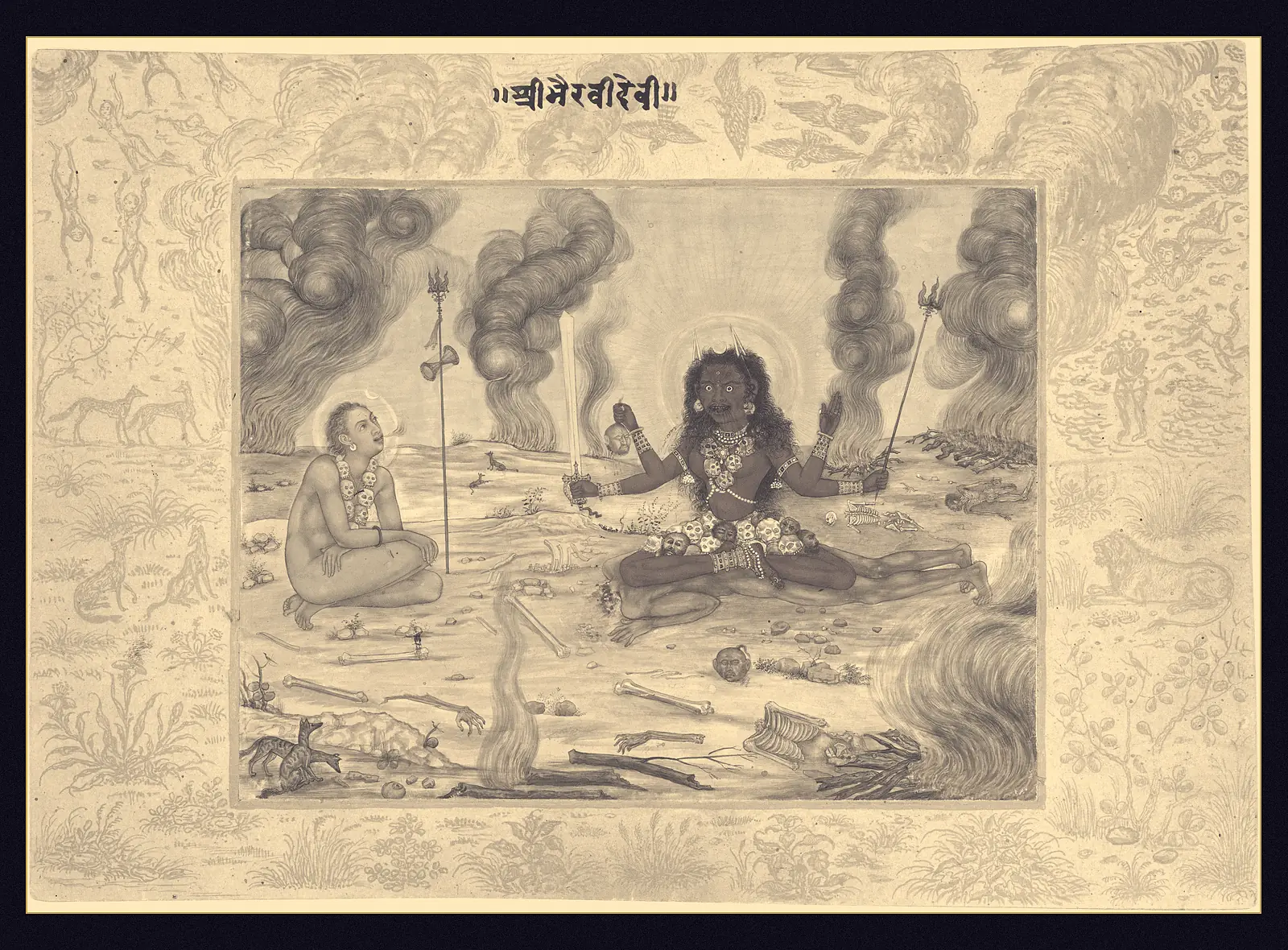
Chinnamastā with her head in her hand. Piśācinī, named for the ghouls. Dhūmāvatī the widow. Ghorā, “the terrible”. Analā, fire. Aruṇā, red. Piṅgalā, tawny. Vārāhī with the boar’s face, and the even column is the cremation ground, where more ugra deities are mentioned: the goddess in her fierce form.
Where the knowledge comes from
There’s no book on the vimśāṁśa, and no paddhati. No classical commentary explains the twenty goddesses; the Sudhā commentary on Parāśara gives you the calculation, a worked example, and stops. Sārāvalī, Phaladīpikā, the Yavanajātaka: none of them treats the D20 at all. The modern teachers read it by houses and they never go into the deities.
So I would like to finally put out this secret method from the Nāth tradition of my astrology guru, who has taught me the same, for the betterment of all.
How to find your vimśāṁśa deity
Take the planet’s longitude within its sign and divide by 1°30′. Round up. That number, 1 to 20, is the aṁśa. Then check whether the sign is odd or even and read the goddess off the matching column above.
Example: a Libra lagna at 19°29′38″. That’s 19.49°, and 19.49 divided by 1.5 is 12.99, which rounds up to 13. Libra is the seventh sign, odd. Odd 13 is Pratyaṅgirā. Do the same for all nine planets and you’ve got the chart’s twenty-goddess reading.
I will publish a calculator for the same shortly, where you will be able to calculate the planet’s aṁśa deity (once I am done with publishing all the 40 deities). Note that you will need an accurate birth time, as the very fast ones, say the Moon, the ascendant and so on, will change their aṁśa deities very fast.
Questions people ask
What is the D20 chart used for?
Parāśara assigns it to upāsanā, worship. In practice it shows your iṣṭa devatā and the form of practice that will work for you, the inherent character of each planet in your life by the goddess over it, and the temper of a planet’s daśā before it arrives.
Are the D20 deities the same for odd and even signs?
No. There are two separate tables of twenty. Odd signs use one set, even signs another, and the two columns have different temperaments. Only Jayā appears twice, both times in the odd list.
Which D20 deities are Mahāvidyās?
All ten. Kālī, Tārā, Lalitā and Tripurā (both Tripurasundarī), Bagalāmukhī and Lakṣmī as Kamalā in the odd signs; Chinnaśīrṣā (Chinnamastā), Dhūmāvatī, Mātaṅgī, Bhuvaneśī and Bhairavī in the even.
Does any book explain what each vimśāṁśa goddess does?
No. Parāśara names them and assigns the varga to worship. The Sudhā commentary gives the calculation and stops. Sārāvalī, Phaladīpikā and the Yavanajātaka don’t treat the D20 at all.
How do I calculate my vimśāṁśa deity?
Divide the planet’s degrees within its sign by 1.5 and round up to get the aṁśa, 1 to 20. If the sign is odd, read the odd column; if even, the even column. Rectify the birth time first; the goddess changes every 1°30′.
How do I get this knowledge myself?
Do your anuṣṭhāna with a saṅkalpa for knowledge.
Sources: Bṛhat Parāśara Horā Śāstra 6.17–21 and 7.4, Sanskrit from the Chaukhamba edition with the Sudhā commentary (Kāśī Sanskrit Series 220). Lalitā Sahasranāma. Images: Wellcome Collection, Metropolitan Museum of Art, all public domain.