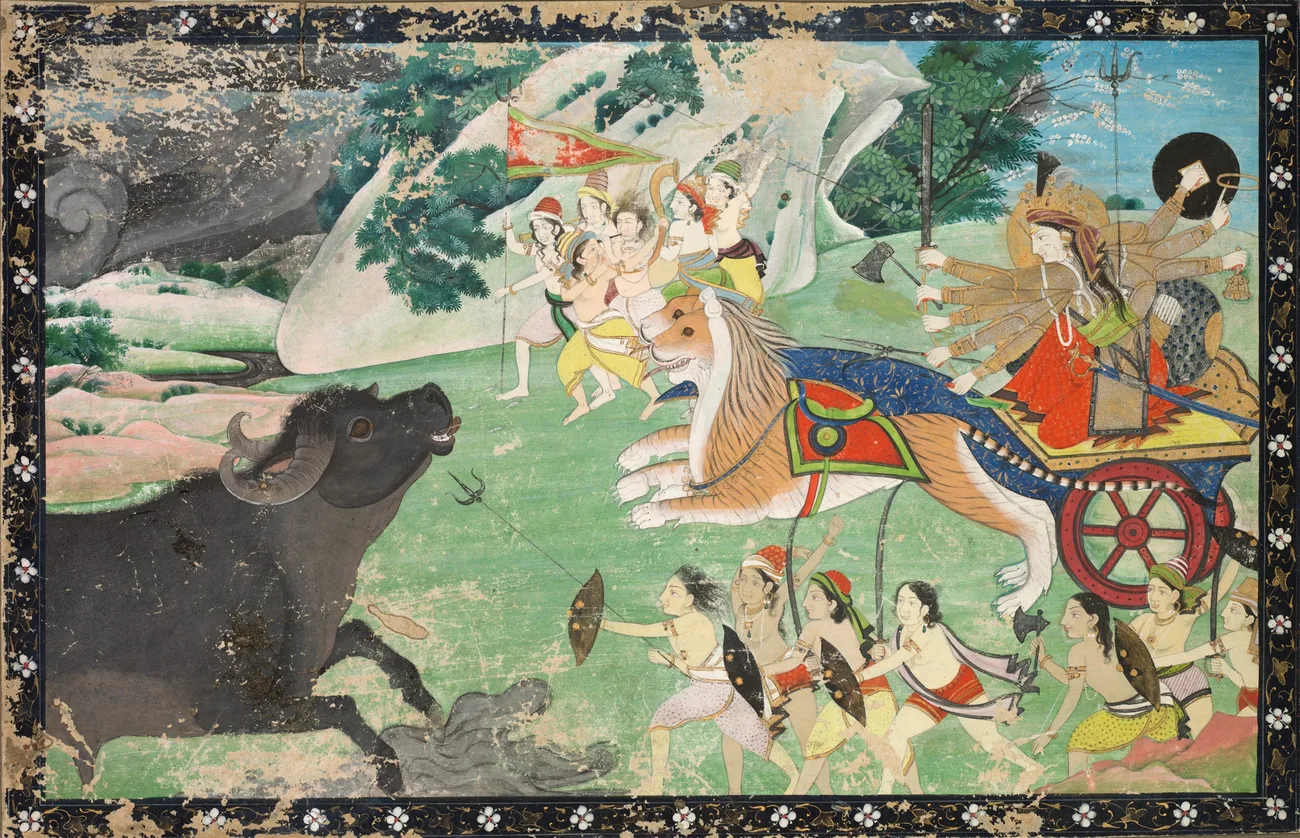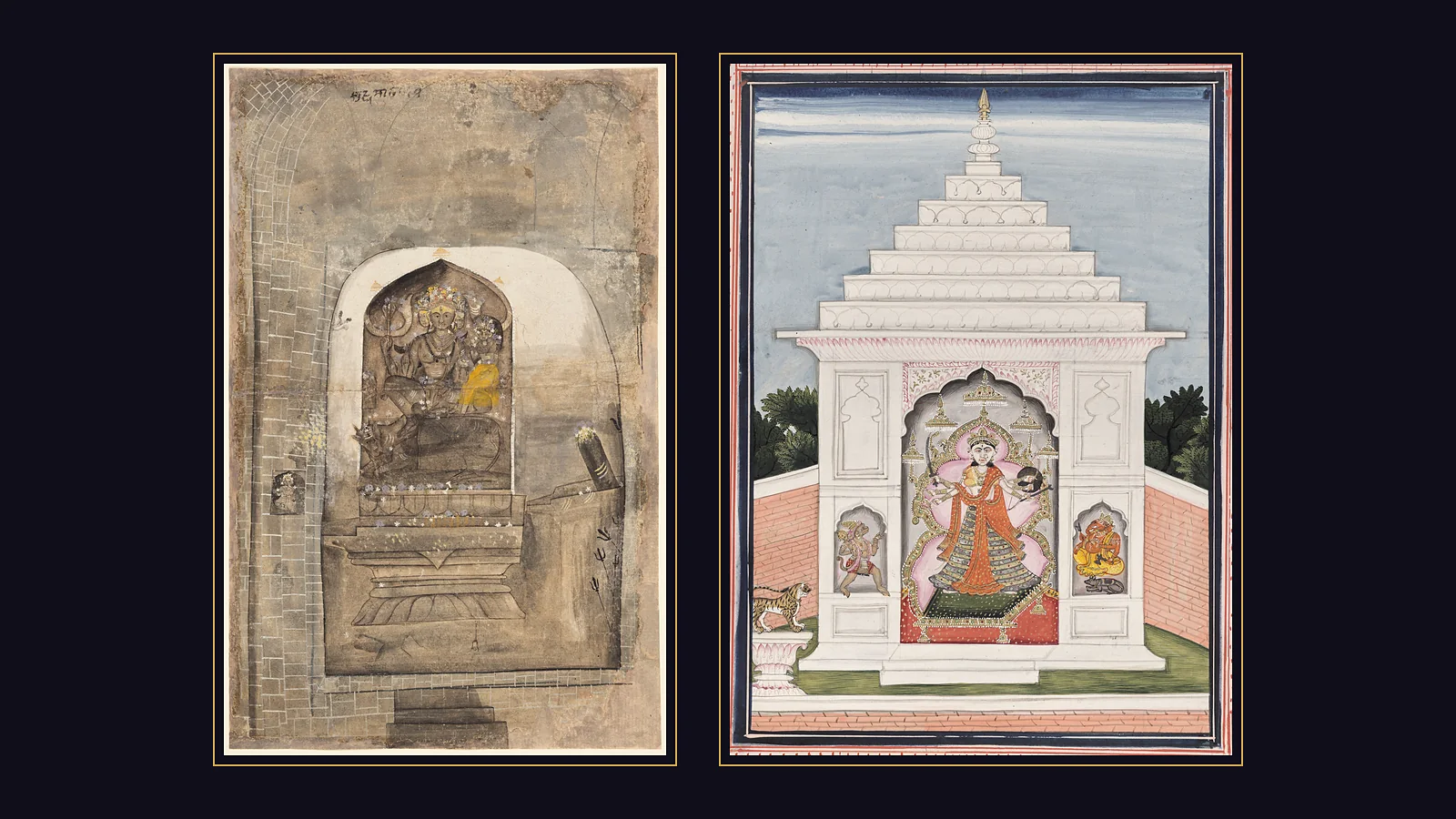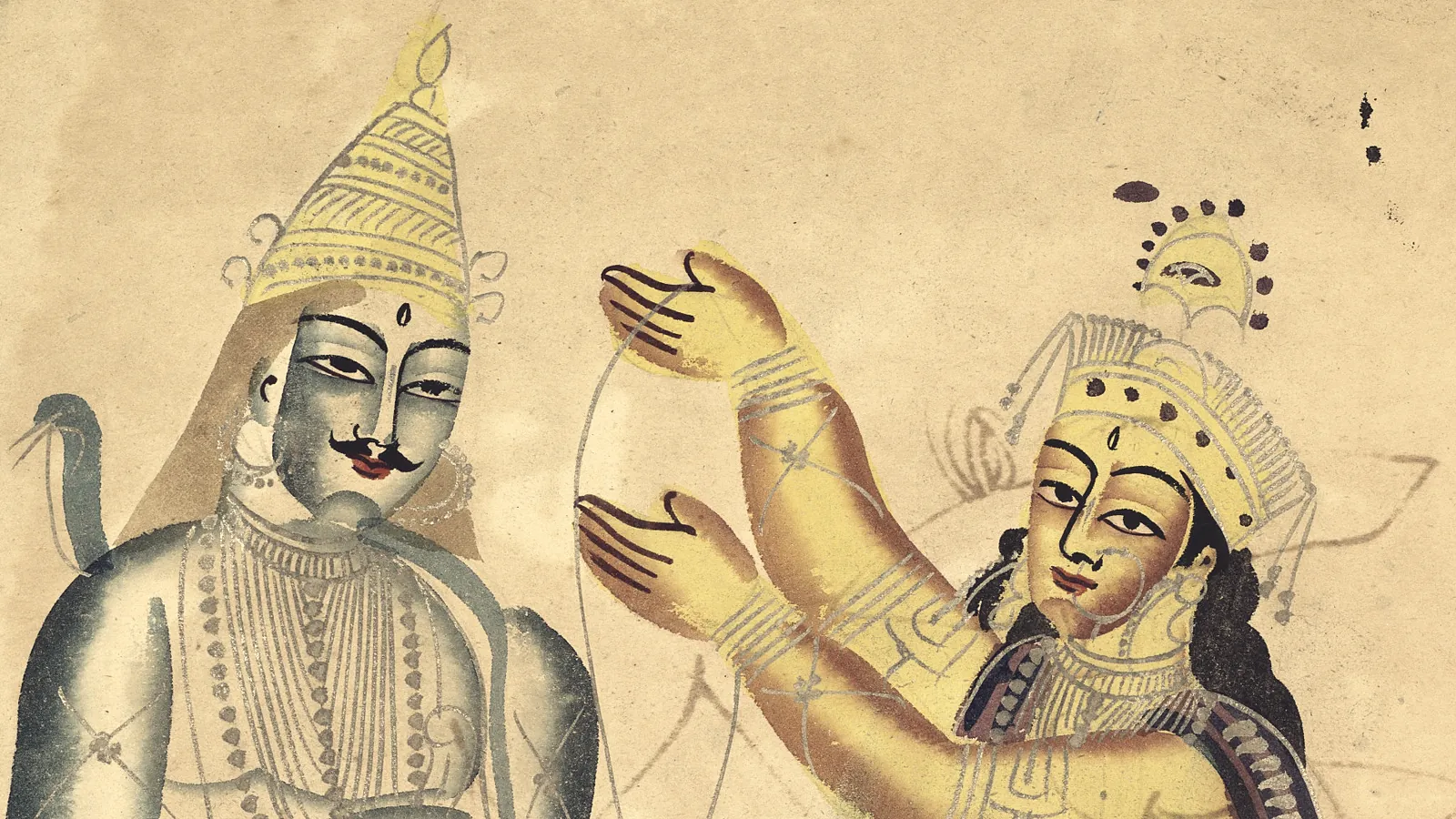
Vimśāṁśa series · Aṁśa 2, odd signs · Gaurī · 11 min read
Her husband called her a name once, in bed, as a joke. She took a hundred years to make him take it back.
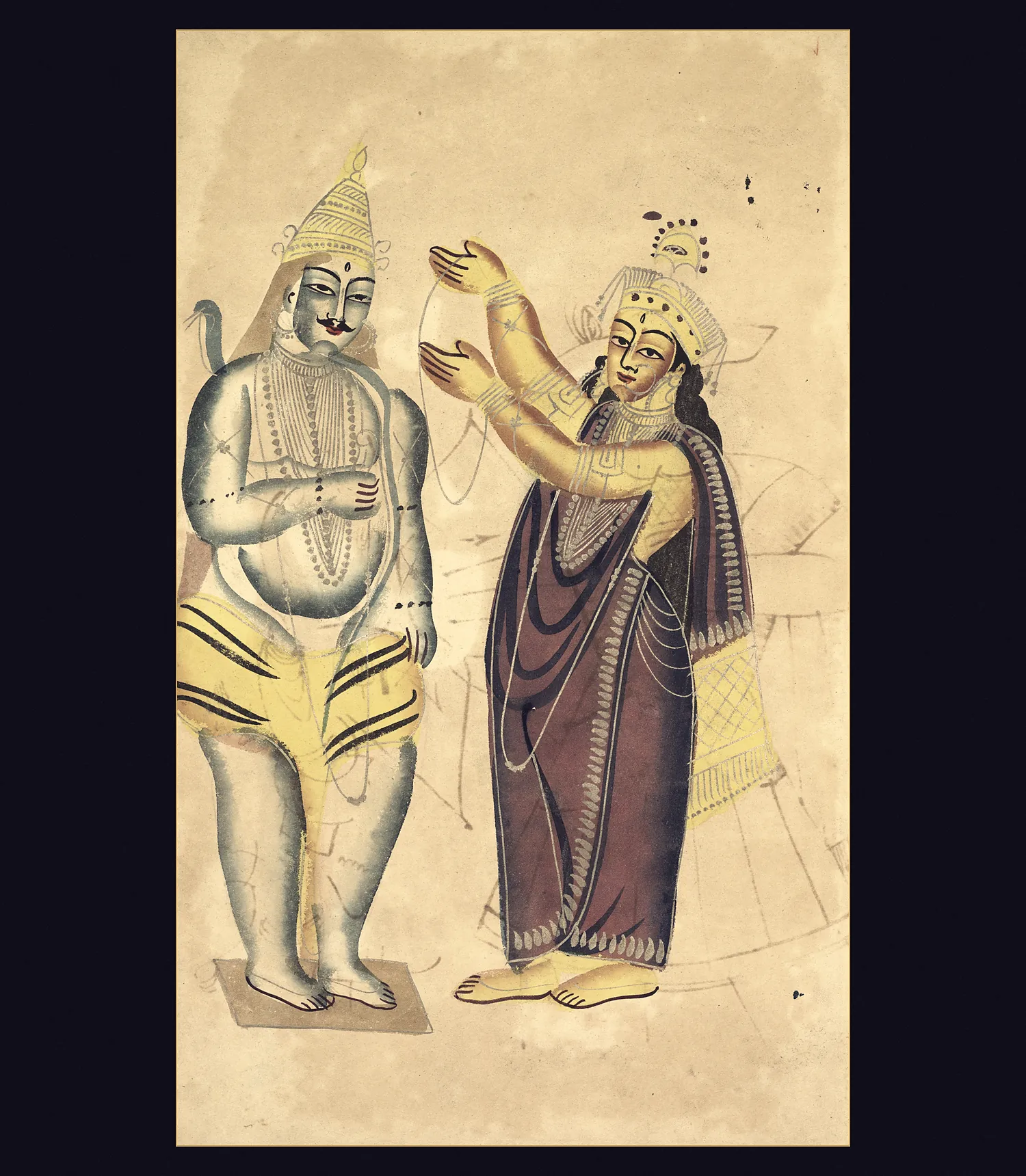
Śiva and Pārvatī were married and they were happy. One afternoon, playing, he called her Kālī. Blackie. She was dark, and he thought it was funny.
Gaurī holds the second aṁśa of every odd sign: 1°30′ to 3°00′ of Aries, Gemini, Leo, Libra, Sagittarius and Aquarius. If you have a planet in there, something was said about you once, in that planet’s department of life, and the rest of your life is the correction of it.
Part 1 has the arithmetic and the full table of forty names. Take your planet’s degrees inside its sign, divide by 1.5, round up. Aṁśa 2 of an odd sign is hers. Aṁśa 1, the ninety minutes directly below her, belongs to Kālī.
The hundred years
The story is in the Vāmana Purāṇa, chapter 28. It starts in bed, and he calls her Kālī for a joke.
रमतः सह पार्वत्या धर्मापेक्षो जगत्पतिः।
ततः कदाचिन् नर्मार्थं कालीत्य् उक्ता भवेन हि॥६॥
पार्वती मन्युनाविष्टा शङ्करं वाक्यम् अब्रवीत्।
संरोहतीषुणा विद्धं वनं परशुना हतम्।
वाचा दुरुक्तं बीभत्सं न प्ररोहति वाक्क्षतम्॥७॥ramataḥ saha pārvatyā dharmāpekṣo jagatpatiḥ |
tataḥ kadācin narmārthaṃ kālīty uktā bhavena hi ||6||
pārvatī manyunāviṣṭā śaṅkaraṃ vākyam abravīt |
saṃrohatīṣuṇā viddhaṃ vanaṃ paraśunā hatam |
vācā duruktaṃ bībhatsaṃ na prarohati vākkṣatam ||7||“The lord of the world was taking his pleasure with Pārvatī, mindful of dharma. Then once, for a joke, she was called Kālī by Bhava. Pārvatī, filled with fury, spoke to Śaṅkara: a wood pierced by an arrow grows back, a wood felled by an axe grows back. A wound made by an ugly word badly spoken does not grow back.”
Vāmana Purāṇa 28.6–7 · GRETIL e-text, Sansknet transcription
Shoot a wood full of arrows and it grows back. Cut it down with axes and it grows back. A word doesn’t. She has a term for it, vākkṣata, the word-wound.
Then she leaves. Up the mountain, to do tapas, and the tapas has one purpose: she is going to stop being called that.
She stands on one foot. She stands there for a hundred years. Her four companions climb up to attend her, Jayā, Vijayā, Jayantī and Aparājitā, and the text says they came to wait on Kālī.
The tiger
A tiger finds her, and he thinks it through. She’s alone. She’s on one foot. She’ll fall eventually, and when she falls he eats her. So he lies down in front of her to wait, and he watches her face.
He watches it for a hundred years. The Purāṇa says he became ekadṛṣṭi, single-sighted, which is the word those texts use for a man who has finally got his meditation right.
At the end of it Brahmā comes down and offers her a boon. She doesn’t spend it on herself. She asks him to give the tiger command of the gaṇas, devotion that can’t be shaken, invincibility, a standing in dharma. Brahmā grants every word of it. Only then does he turn back to her and ask what she wants.
The gold
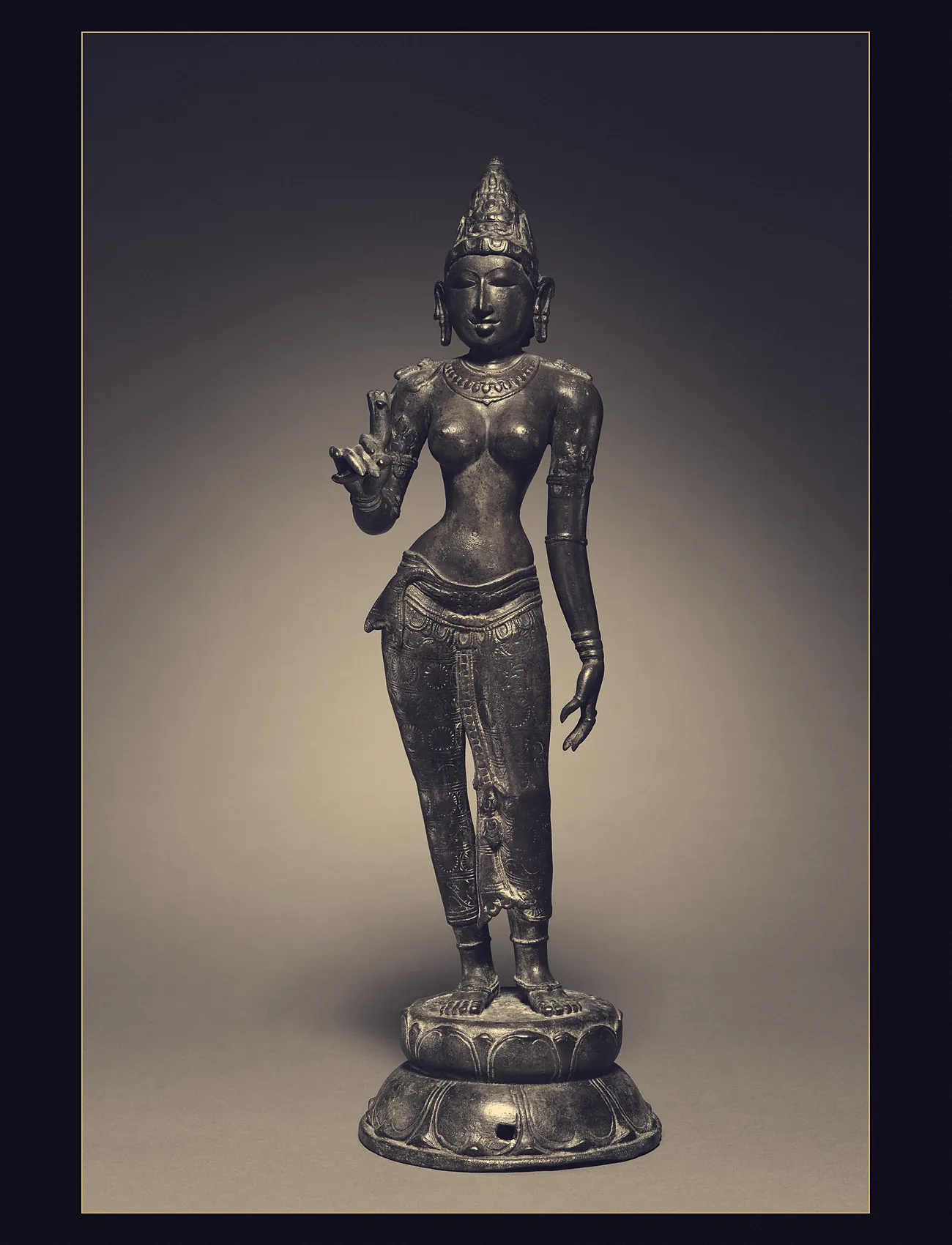
She asks to be the colour of gold. He gives it, and she comes out of the black the way you come out of a coat.
ततो वरं गिरिसुता प्राह देवी पितामहम्।
वरः प्रदीयतां मह्यं वर्णं कनकसंनिभम्॥२२॥
तथेत्य् उक्त्वा गतो ब्रह्मा पार्वती चाभवत् ततः।
कोशं कृष्णं परित्यज्य पद्मकिञ्जल्कसंनिभा॥२३॥
तस्मात् कोशाच् च संजाता भूयः कात्यायनी मुने॥२४॥tato varaṃ girisutā prāha devī pitāmaham |
varaḥ pradīyatāṃ mahyaṃ varṇaṃ kanakasaṃnibham ||22||
tathety uktvā gato brahmā pārvatī cābhavat tataḥ |
kośaṃ kṛṣṇaṃ parityajya padmakiñjalkasaṃnibhā ||23||
tasmāt kośāc ca saṃjātā bhūyaḥ kātyāyanī mune ||24||“Then the mountain’s daughter, the goddess, asked Brahmā for a boon: let a complexion like gold be given to me. Saying so be it, Brahmā departed, and Pārvatī then became, having cast off the black sheath, like the filaments of a lotus. And out of that sheath was born, once again, Kātyāyanī.”
Vāmana Purāṇa 28.22–24 · GRETIL e-text; two evident data-entry slips normalised, पार्वती for परवती and the feminine singular संनिभा for the plural
What she does to a planet
Kālī takes away whatever your planet was leaning on. Gaurī gives your planet the standing it was refused, and she charges you the full price in years.
Early on, in that planet’s department, somebody with authority passes a verdict on you. Not serious. Not pretty enough, not marriageable, too dark, too slow, not one of us. Your planet spends the next thirty years quietly arranging itself around proving it wrong.
Then the daśā comes and the proving gets finished, formally, in front of people. A title, a marriage, a degree, a seat at the table where the sentence was passed. I’ve watched people walk away from a Gaurī planet eighteen months in because nothing had happened. Clients with this placement who try to win it privately stay exactly where they are until they let somebody say it out loud. Whoever passed the verdict tends to need something from you eventually, and the placement finishes on the day you give it to them.
Planet by planet
Find your planet and read its row. In Aries, Leo and Sagittarius, add pressure to whatever the row says: same result, harder early life.
| Planet in aṁśa 2, odd sign | What was said | What the daśā settles |
|---|---|---|
| Sun | The father’s verdict on what the child would amount to | Formal standing, handed over by an institution. The chair, not the influence. Often after the father is gone. |
| Moon | A remark about the face, the body or the temperament, usually from the mother | The face is restored, sometimes literally. Comfort in the body after decades without it. |
| Mars | That he has no fight in him | He wins without fighting, and the rivals end up working for him. The worst Mars in the twenty if you want a war. |
| Mercury | How he speaks. An accent, a stammer, a language he didn’t have | Her own element, so this is the strongest of the ten. The mocked voice becomes the living: writing, teaching, court, the mic. |
| Jupiter | A teacher’s judgment, delivered once, in front of the class | A long apprenticeship, then a title that arrives late and never has to be defended again. |
| Venus | Not marriageable. Not beautiful. Not from a good enough house | Her most literal placement. Marriage late and well, beauty arriving in the forties, the ornament and the made thing. |
| Saturn | Nothing was said. Saturn was simply overlooked for twenty years | A hundred years on one foot is Saturn’s own discipline, so this is the best Saturn in the twenty for a slow career. Seniority nobody can touch. |
| Rāhu | Outsider, not one of us. Said about the family, the caste or the country | Legitimacy on paper, from the body that refused it. Rāhu spends the rest of his life not quite believing it. |
| Ketu | Nothing, because Ketu never wanted the verdict | The tapas with no reward attached. Recognition arrives and gets declined. Heavily mokṣa-leaning. |
| Lagna | The name itself, or the family’s standing | The whole life arranges itself around being called correctly. These are the people who change their surname. |
Mercury is the row I look for first. Every chart on my shelf with Mercury in her aṁśa has a speech injury in it before the age of fifteen, and in every one of them the adult livelihood runs through the mouth or the pen, so I now ask about it directly.
The Gaurī Venus marriages in my files are the good ones.
Ninety minutes of arc is the entire distance between Kālī and Gaurī, and for anything except the slow planets that sits inside the error bar of an ordinary Indian birth time.
When she holds a kāraka
Parāśara ranks the kārakas by degrees, highest first, so the same arithmetic that made an Ātmakāraka rare in Kālī’s aṁśa applies here: she holds low degrees, and the Ātmakāraka holds the highest in the chart.
Ātmakāraka under Gaurī
The whole life is organised around one verdict, and they know the sentence word for word thirty years later. They can tell you where they were standing when they heard it.
What they do with it is build, slowly, in public, in the exact field the verdict was about. The Ātmakāraka daśā is when the acknowledgment lands.
Amātyakāraka under Gaurī
The minister trades on reputation, and here the name attached to the work is worth more than the work.
The career shape is a long flat line and then a step, and the step is always somebody else’s decision, announced publicly. Where the 9th from the Moon gives you the deity for the insecurity, this gives you the timetable, and the timetable says don’t change fields at forty, because the work is nearly done.
Gnātikāraka under Gaurī
The kāraka of rivals, disease, debt and litigation. In practice your cases settle. The rival gets absorbed, and five years later he’s on your payroll or asking you for a reference and getting one. Debts get restructured on terms the creditor proposes.
She doesn’t protect people who need the fight. If your Gnātikāraka is under Gaurī and your instinct is to escalate, the chart won’t back you, and every escalation costs more than it returns.
Inside the daśā
It doesn’t feel like anything for a long time. A Gaurī daśā is a long stretch in which you do the same unglamorous thing while people with worse charts overtake you.
None of it shows while it’s accruing, which is why the middle of the period is where people quit, and quitting is the only way to lose this placement. The ones who stay get the whole thing at once near the end, and then tell you the daśā was wonderful, having forgotten eleven years of it.
Tell someone in year four that their daśā is a good one and they’ll look at their life and conclude you’re a fraud.
What she asks for
Hartālikā in Bhādrapada, Gangaur in Caitra, which in Gujarat and Rajasthan is still kept out in the streets, and the Monday fasts. Pick something small and don’t miss it for a year.
Any Pārvatī stotra. The Lalitā Sahasranāma, where she’s name 635, Gaurī, the fair one, and Svarṇagarbhā, the golden womb, three names later, and none of it needs initiation.
Do not answer the person who said the thing. Not now, not during the daśā, not even when you’ve got the perfect line and it would land. She didn’t argue with Śiva. She walked out, did the work, and came back gold, and the Purāṇa gives her argument exactly one verse before it sends her up the mountain.
Questions people ask
Which degrees are Gaurī’s in the D20?
1°30′ to 3°00′ of Aries, Gemini, Leo, Libra, Sagittarius and Aquarius, which is aṁśa 2 of every odd sign. Aṁśa 2 of the even signs belongs to Medhā.
How is Gaurī different from Kālī in a chart?
Kālī takes away what the planet was leaning on, and she’s quick about it. Gaurī gives the planet the standing it was denied, and she’s slow. They sit in neighbouring aṁśas of the same six signs, ninety minutes of arc apart.
Why does the Vāmana Purāṇa say Kālī came out of Gaurī when the Devī Māhātmya says the opposite?
Both agree Pārvatī splits into a dark half and a bright one; Devī Māhātmya 5.87–88 has Ambikā stepping out of Pārvatī’s body-sheath, and the Vāmana has the dark half stepping out of Gaurī.
My Venus is in her aṁśa and I want to marry now. What do I do?
You’re asking the wrong placement. The marriages I have on file out of this aṁśa are late, and they’re the good ones.
Where does this reading come from?
No classical text explains what a vimśāṁśa deity does to a planet. Parāśara names the twenty, assigns the varga to upāsanā, and no commentary takes it further. What’s here comes out of the goddess’s own story in the Devī Māhātmya and the Vāmana Purāṇa, and out of charts. Test it on the charts you have.
Next in the series is Jayā, aṁśa 3 of the odd signs. Part 1, with the full table of all forty names, is here. If you want your own vimśāṁśa read properly, with the deity and the daśā sequence together, that’s what a consultation is for.
Sources: Vāmana Purāṇa 28.6–9, 28.14–24, GRETIL e-text of the Sansknet transcription; two evident data-entry slips normalised in 28.23 and noted at the verse. Devī Māhātmya 5.87–88, Sanskrit from the proofread Durgā Saptaśatī at sanskritdocuments.org. Bṛhat Parāśara Horā Śāstra 6.17–21 for the twenty names, 7.4 for the varga assigned to upāsanā and chapter 32 for the kārakas; Chaukhamba edition with the Sudhā commentary, English checked against R. Santhanam. Lalitā Sahasranāma names 635 and 638. Images: Cleveland Museum of Art, CC0.