Vimśāṁśa series · Aṁśa 4, odd signs · Lakṣmī · 11 min read
A sage handed Indra a garland and Indra put it on his elephant, and the elephant threw it down and trod on it. What the goddess did about it is what a planet in her aṁśa does with your life.
Durvāsas was walking when a nymph gave him a garland of flowers that never wilted. He was wearing it when he met Indra riding Airāvata, and he took it off and handed it up to the king of the gods. Indra, who had everything already, took it without getting down and laid it across the elephant’s forehead. The elephant smelled it, disliked it, pulled it off with his trunk and dropped it on the road, and put a foot on it.
aiśvaryamadaduṣṭātmann atistabdho ‘si vāsava |
śriyo dhāma srajaṃ yas tvaṃ maddattāṃ nābhinandasi ||“You whose self is spoiled by the intoxication of lordship, you have grown stiff-necked, Vāsava, in that you take no joy in the garland I gave you, which was the dwelling place of Śrī.”
Viṣṇu Purāṇa 1.9.12 · Sanskrit from the Pathak critical edition via GRETIL; English H. H. Wilson 1840
Śriyo dhāma. The dwelling place of Śrī.
Lakṣmī rules the fourth aṁśa of every odd sign in the vimśāṁśa: 4°30′ to 6°00′ of Aries, Gemini, Leo, Libra, Sagittarius and Aquarius. If the chart is new to you, Part 1 of this series has the two tables and the arithmetic.
What a world without her looks like
The herbs and creepers wither. Sacrifices stop being performed, ascetics stop performing austerities, nobody gives anything away.
niḥsattvāḥ sakalā lokā lobhādyupahatendriyāḥ |
svalpe ‘pi hi babhūvus te sābhilāṣā dvijottama ||“All the worlds became without sattva, their senses struck down by greed and the rest; and they became grasping, best of the twice-born, even after the smallest thing.”
Viṣṇu Purāṇa 1.9.28 · critical edition via GRETIL
Svalpe ‘pi sābhilāṣāḥ. Craving even for a trifle. The mind contracts, and starts wanting things in proportion to what it can no longer have.
yataḥ sattvaṃ tato lakṣmīḥ sattvaṃ bhūtyanusāri ca |
niḥśrīkāṇāṃ kutaḥ sattvaṃ vinā tena guṇāḥ kutaḥ ||“Where there is sattva, there is Lakṣmī; and sattva follows upon prosperity. Whence sattva for those without Śrī? And without that, whence the qualities?”
Viṣṇu Purāṇa 1.9.29 · identical in the critical edition and the 1910 vulgate, no variant
Without the qualities there is no strength or courage, a man without strength or courage gets stepped over by everybody, and a man who is publicly stepped over loses his mind.
She does not change sides
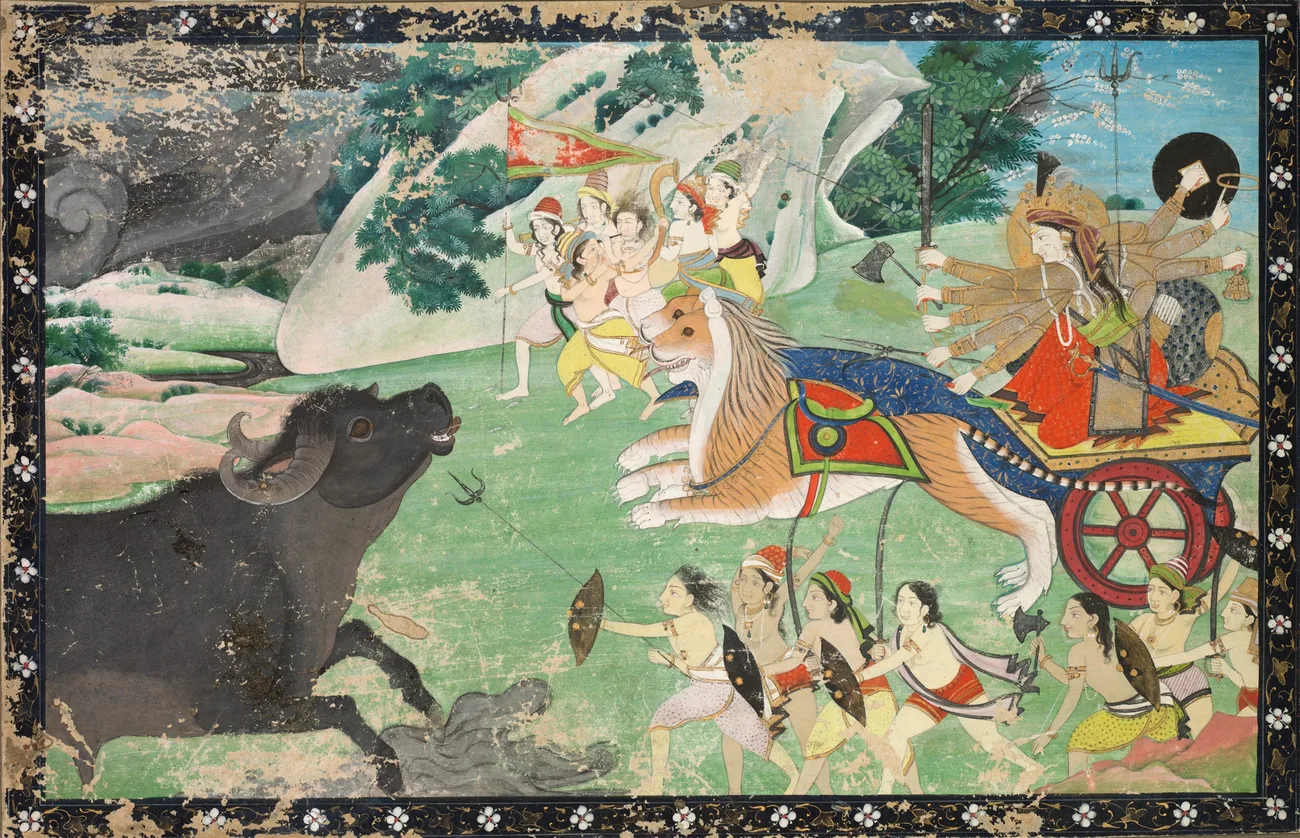
The demons attack and the gods lose. The usual gloss is that Lakṣmī went over to the asuras, which is why they won.
lobhābhibhūtā niḥśrīkā daityāḥ sattvavivarjitāḥ |
śriyā vihīnair niḥsattvair devaiś cakrus tato raṇam ||“The Daityas, themselves overcome by greed, themselves without Śrī, devoid of sattva, then made war with the gods, who were bereft of Śrī and without sattva.”
Viṣṇu Purāṇa 1.9.32 · critical edition via GRETIL
Niḥśrīkā daityāḥ. When she goes, she goes from everyone, and the asuras win only because they had less height to fall from.
No source I can reach prints the Viṣṇu Purāṇa in Devanāgarī. GRETIL carries the Pathak critical edition in transliteration only, and the 1910 vulgate e-text is visibly corrupt in this very chapter. So the Sanskrit above is IAST from the critical edition.
The gods do not get her back by deserving it
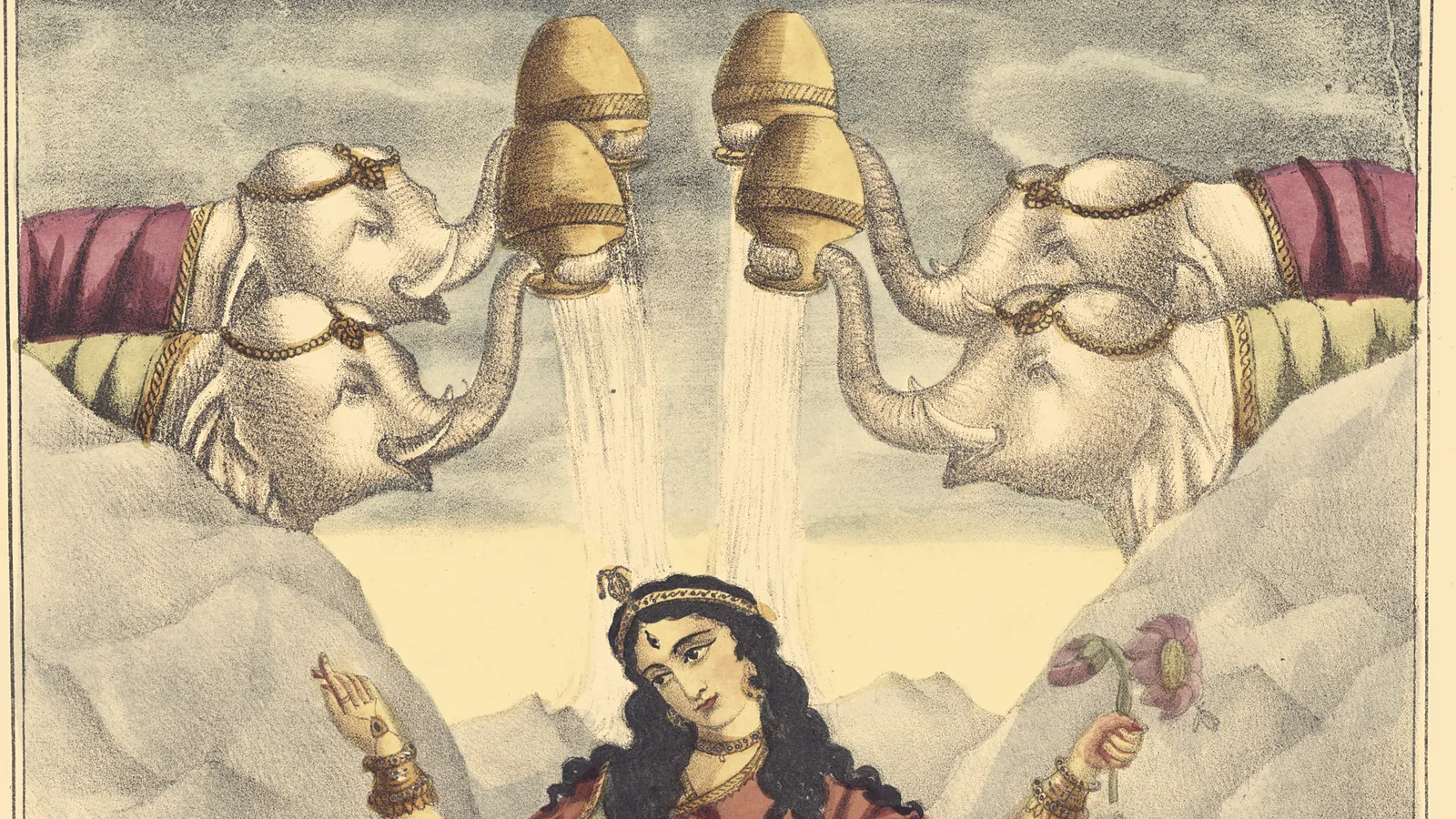
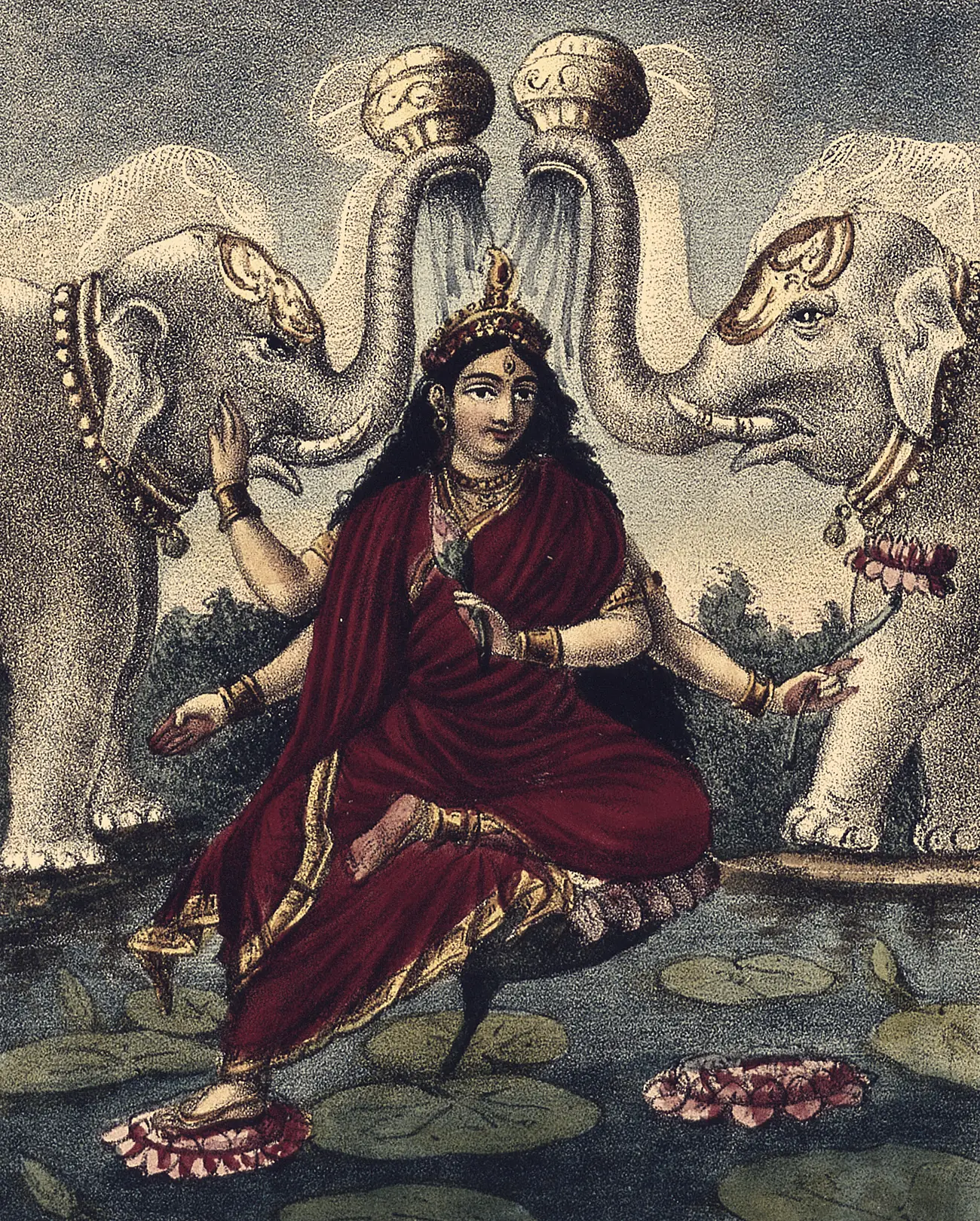
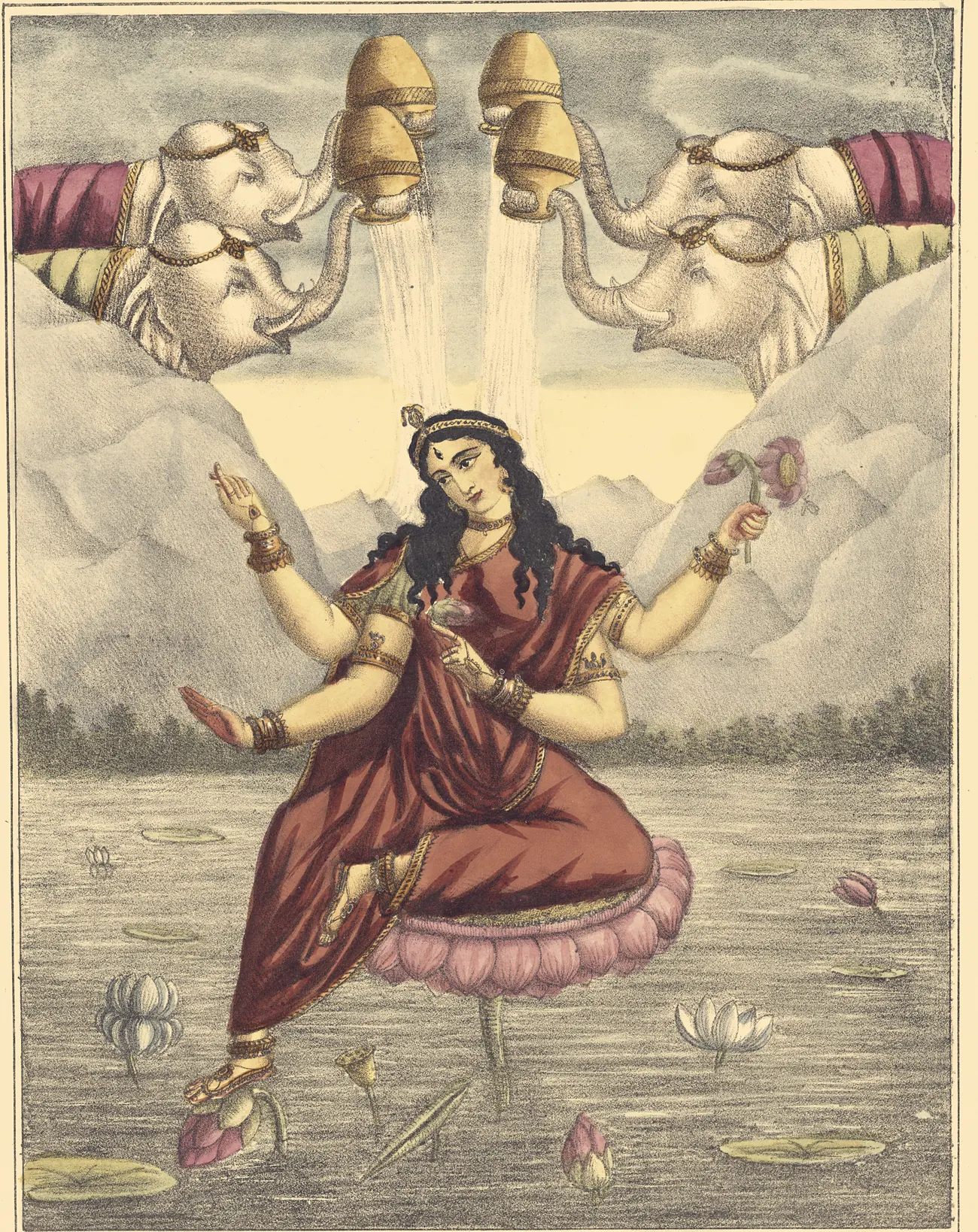
The gods and the asuras pull the mountain between them, the ocean gives up its treasures, and Lakṣmī rises out of it. Indra praises her in a long hymn. She offers him a boon.
Indra asks two things. That she never abandon the three worlds, and that she never abandon anyone who praises her with that hymn. She grants the first flat.
yaś ca sāyaṃ tathā prātaḥ stotreṇānena mānavaḥ |
māṃ stoṣyati na tasyāhaṃ bhaviṣyāmi parāṅmukhī ||“And whatever man shall praise me with this hymn at evening and at morning, from him I shall not turn away my face.”
Viṣṇu Purāṇa 1.9.136 · critical edition via GRETIL
Indra said whoever praises you. She said whoever praises me twice a day, morning and evening.
What she does to a planet in her aṁśa
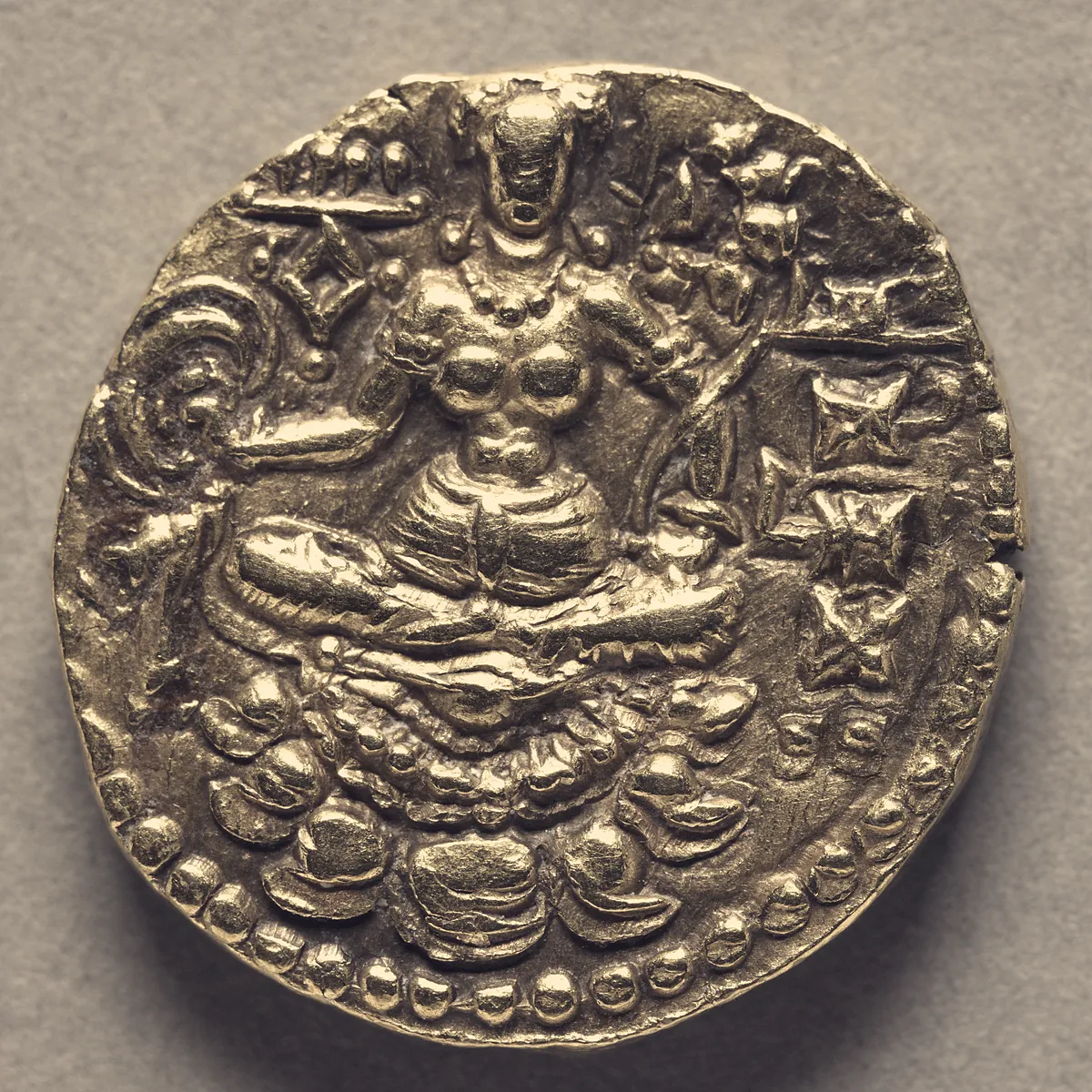
A planet in Lakṣmī’s aṁśa becomes attractive to fortune. The thing the planet signifies starts drawing resources, people, offers and attention towards it without you doing anything obviously different. And the same planet loses them the same way, without an identifiable mistake, when she turns her face.
The Sun in her aṁśa gives a father, a status or a career that other people place you into. It goes well until a change in setting removes whoever was doing the placing.
The Moon is the most exposed of the ten. The mind itself becomes the mark that attracts, so you are liked, usually without effort and often without knowing why. The cost is that your mood tracks your circumstances almost one to one.
Mars in the air signs lands in a Mars nakṣatra here, which doubles him, and you acquire by direct action and can’t hold what you acquired by the same means. Property and machinery are the usual arenas.
Mercury gives the broker, the intermediary. Your income depends on standing between two parties.
Jupiter gives teaching or advising that’s paid well for reasons you didn’t arrange.
Venus in Lakṣmī’s aṁśa gives someone who is chosen, in marriage and in work both, and who therefore has very little practice at evaluating.
Saturn takes twelve and a half days to cross, or some two months if he stations inside her, and is the hardest reading. She is fortune. He is the only graha who doesn’t respond to a glance. What I see is a long, slow accumulating gain you don’t enjoy while it’s happening, and a late recognition that it was there the whole time.
Rāhu amplifies the attracting without the substance behind it, which is exactly the niḥsattva of the curse passage.
Ketu in her aṁśa in the fire signs falls in his own nakṣatra. Wealth arrives and isn’t wanted. I have seen this three times and each time the person had walked away from something substantial and couldn’t explain the decision afterwards.
| Odd sign | Lakṣmī’s degrees | Nakṣatra and pāda | Nakṣatra lord |
|---|---|---|---|
| Aries | 4°30′ to 6°00′ | Aśvinī pāda 2 | Ketu |
| Gemini | 4°30′ to 6°00′ | Mṛgaśīrā pāda 4 | Mars |
| Leo | 4°30′ to 6°00′ | Maghā pāda 2 | Ketu |
| Libra | 4°30′ to 6°00′ | Citrā pāda 4 | Mars |
| Sagittarius | 4°30′ to 6°00′ | Mūla pāda 2 | Ketu |
| Aquarius | 4°30′ to 6°00′ | Dhaniṣṭhā pāda 4 | Mars |
Ninety minutes of arc in six signs is nine degrees out of three hundred and sixty. Two and a half percent of the sky, so about one planet in forty lands in it. The Sun needs thirty-six and a half hours to cross her window. The Moon under three, and the lagna six minutes. If your birth time was recorded to the nearest quarter hour, which is how most Indian birth times were recorded, a lagna in this aṁśa is a guess and needs rectifying before you build anything on it.
When she holds a kāraka
The Ātmakāraka is whichever planet holds the highest degrees in the chart. Lakṣmī’s aṁśa is at 4°30′, near the bottom of the range, so an Ātmakāraka here requires every planet in the chart to sit under six degrees.
Dārākāraka in Lakṣmī’s aṁśa
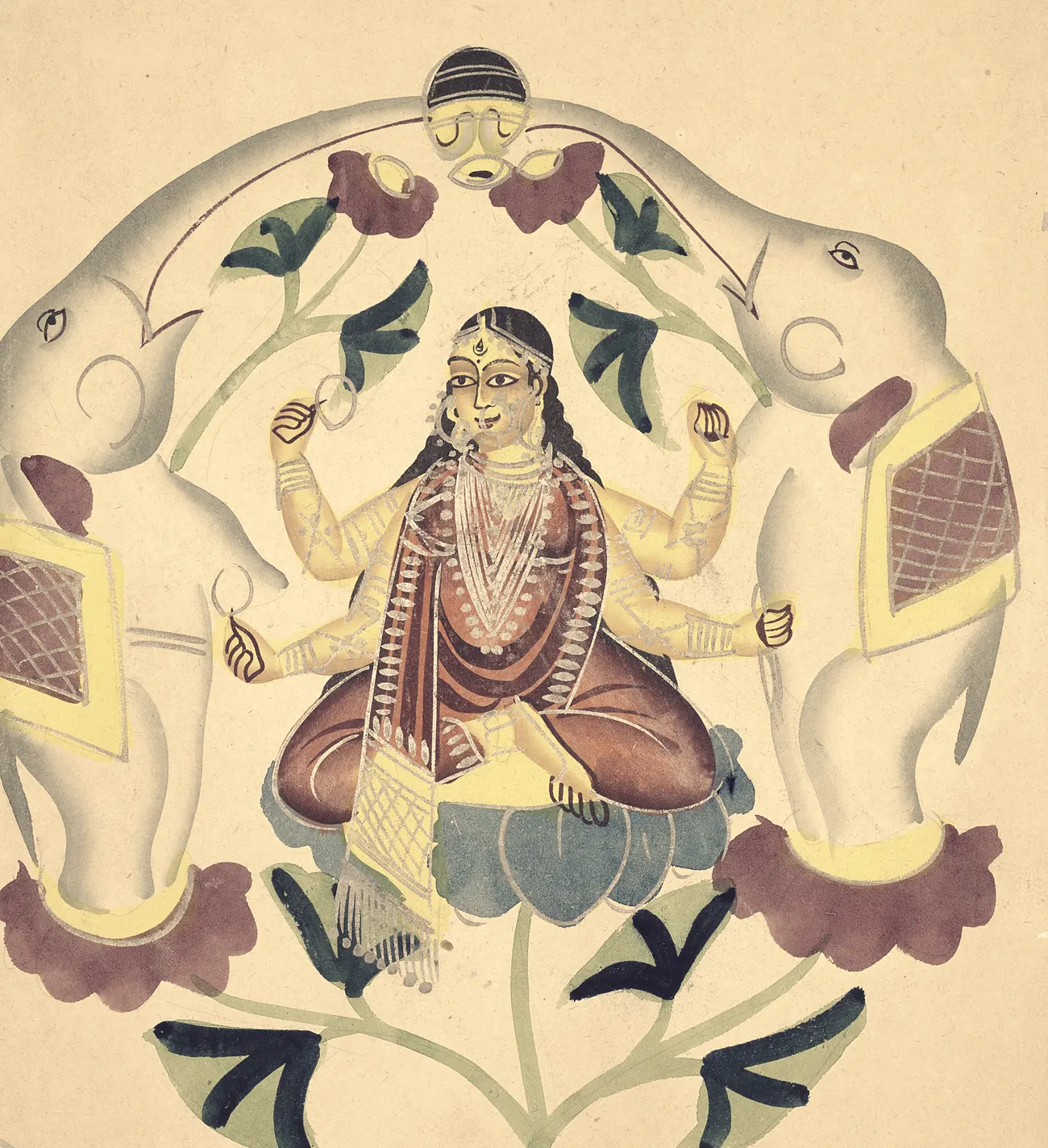
The DK signifies the spouse. Lakṣmī on it gives a marriage that arrives, often from a direction nobody was watching, and often with you describing yourself afterwards as having been chosen.
If you have only ever been chosen you have never had to evaluate, and when the marriage asks you for an assessment you don’t have the instrument.
Gnātikāraka in Lakṣmī’s aṁśa
The GK carries cousins, rivals, disputes and the slow obstacles. Lakṣmī here gives you the relative who is the source of your money and the source of your quarrel, in that order. Property disputes in joint families run through this placement more than any other I have found.
How the daśā feels
The period of a planet in her aṁśa opens with an atmosphere, and people usually date the start of it three or four months late because nothing announced it.
Things get easier. Money that was tight is less tight for you, people who were unavailable return calls, something that had been stuck for years moves without anyone applying force to it. Your own account will almost always be that you got lucky, and you won’t be being modest; you can’t identify what you did.
The returning calls stop being returned. The easy thing becomes difficult again, and because there was never a cause for the good period there’s no cause to fix. People in the last year of one of these daśās describe it as things going quiet.
The practice she asks for is in the boon she granted Indra. The Śrī Sūkta or the Kanakadhārā Stotra, morning and evening, both of which are public and need no dīkṣā. She specified the frequency herself and refused to grant it on any other terms, and in twelve years I haven’t seen anything work for this placement that was done irregularly. If you want the deity assignment worked out from your own chart, that’s what the Spiritual Guidance Report is for.
A planet in Lakṣmī’s aṁśa is a good placement and the overwhelming majority of people who have one are fine. The difficulty is a specific blindness that comes from having been given things. And if your birth time is anything less than exact, check the neighbouring aṁśas before you decide this one is yours. Jayā is ninety minutes below her and Vijayā ninety minutes above, and the three readings have almost nothing in common.
Questions people ask
What degrees does Lakṣmī rule in the D20 chart?
4°30′ to 6°00′ of the odd signs: Aries, Gemini, Leo, Libra, Sagittarius and Aquarius. She is aṁśa 4 of twenty. In even signs those same degrees belong to Piśācinī, a different goddess with a different reading.
Is Lakṣmī the same as Kamalā?
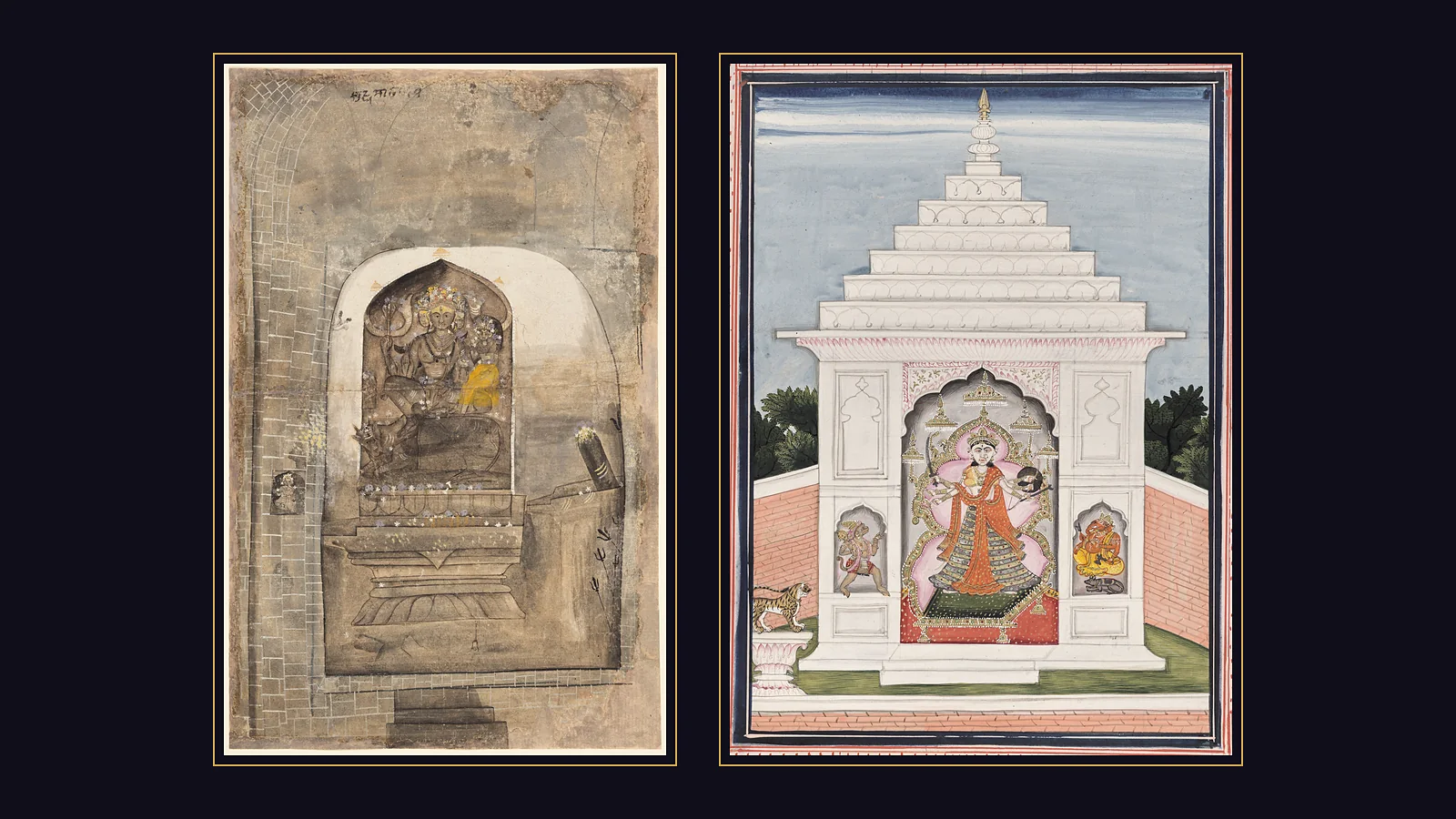
The same goddess, two frames. Kamalā is her name as the tenth Mahāvidyā, with a bīja mantra, a yantra and a Tantric lineage. The Śāktapramoda’s hymn of her names gives her fierce epithets that the Purāṇic Lakṣmī never carries. The Purāṇic Lakṣmī is Viṣṇu’s consort and is worshipped without initiation. For a planet in her aṁśa, both readings apply.
Who is Alakṣmī?
The elder. The Śrī Sūkta names her Jyeṣṭhā and calls her hunger, thirst and filth; the Purāṇas make her Lakṣmī’s older sister, born from the churning first. The Viṣṇu Purāṇa’s word for her is kalahādhārā, the foundation of quarrel, which points at domestic conflict.
Does the D20 show wealth?
Not directly. The vimśāṁśa is assigned to upāsanā and what it shows is the temper of a planet and the form of practice that moves it. For money read the second house, the eleventh, and the daśā sequence; for the deity behind a specific problem, the ninth from the Moon is a more direct method.
My Moon is at 5° of Leo. Is that hers?
Yes. Check the birth time to the minute if you can, then read the Moon section above and the Dārākāraka section if the Moon also happens to hold your lowest degrees.
Which goddess is next in the series?
Aṁśa 5 is Vijayā, and she is already covered in the Jayā chapter, because the two of them share one story. After that comes Vimalā, aṁśa 6, 7°30′ to 9°00′, the goddess of one small shrine inside the Jagannātha temple at Puri.
Sources: Viṣṇu Purāṇa 1.9, Pathak critical edition (Oriental Institute, Vadodara) via GRETIL, with H. H. Wilson’s 1840 English. Śrī Sūkta (Ṛgveda khila 2.6), sanskritdocuments.org and Scheftelowitz’s 1906 edition via GRETIL. Bṛhat Parāśara Horā Śāstra 6.17–21 for the twenty names and 7.4 for the varga assigned to upāsanā.