Vimśāṁśa series · Aṁśa 6, odd signs · Vimalā · 10 min read
Fifty-one places got a piece of a goddess’s body. Puri got her leftovers.
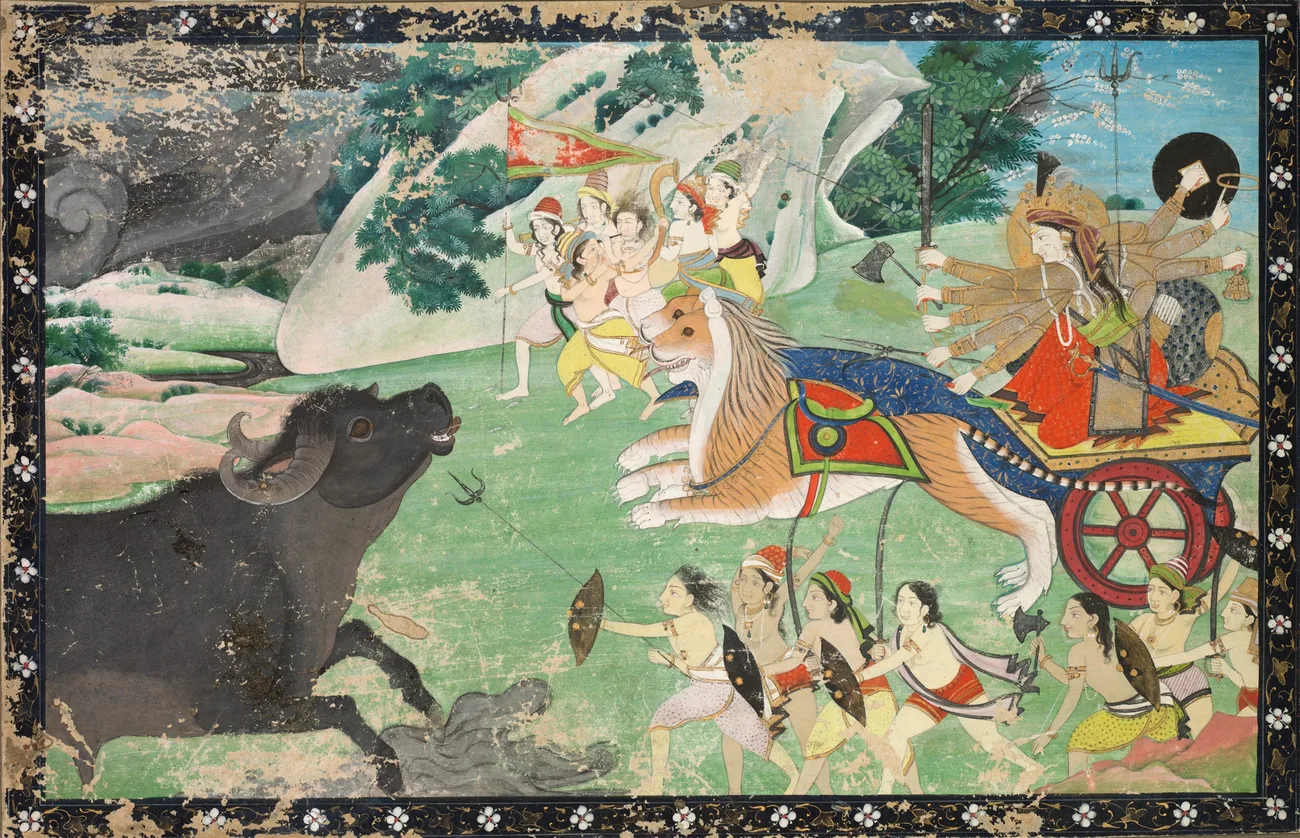
Satī burned herself at her father’s sacrifice and Śiva carried the corpse across the sky, and the world began to come apart under the weight of his grief. Viṣṇu followed him with the discus and cut the body down piece by piece as they went. Wherever a piece landed, that ground became a pīṭha, a seat, and a goddess stayed there, the feet in one place and the tongue in another.
Vimalā holds aṁśa 6 of the odd signs in the vimśāṁśa, which is 7°30′ to 9°00′ of Aries, Gemini, Leo, Libra, Sagittarius and Aquarius. She is the sixth of twenty goddesses in the odd column of the D20 deity list, two aṁśas above Lakṣmī and one above Vijayā, and in the world she is the goddess of a single shrine inside the Jagannātha temple at Puri, on the Odisha coast.
The lists do not agree about Puri
You will read everywhere that Satī’s navel fell at Puri and that is why Vimalā sits there. The verse people cite for it is from the Pīṭhanirṇaya, also called the Mahāpīṭhanirūpaṇa.
उत्कले नाभिदेशञ्च विरजाक्षेत्रमुच्यते ।
विमला सा महादेवी जगन्नाथस्तु भैरवः ॥ १३ ॥utkale nābhideśañ ca virajākṣetram ucyate |
vimalā sā mahādevī jagannāthas tu bhairavaḥ || 13 ||“In Utkala, the region of the navel; and the place is called Virajā-kṣetra. Vimalā is the Great Goddess there, and Jagannātha is the Bhairava.”
Pīṭhanirṇaya 13 · Devanāgarī as published by greenmesg, which notes that recensions vary; Sircar records the variants Vijayā for the Devī and Jaya for the Bhairava
D. C. Sircar, whose 1948 study The Śākta Pīṭhas is still the critical work on these lists, puts Virajā at modern Jajpur on the Vaitaraṇī, about 130 kilometres up the coast. His separate entry for Puri gives it Vimalā from two sources only, and neither of those assigns a limb to anything.
So the verse fuses two places, putting the navel at one town and the goddess and her Bhairava at another, and the popular version solves that by quietly deleting the word Virajā.
The answer I follow
The Śivacarita keeps two lists, one of great pīṭhas and one of lesser ones. In the great list, Utkala gets the navel, and the goddess there is Vijayā and the Bhairava is Jaya, not Vimalā and not Jagannātha. Vimalā turns up in the other list, the lesser one, at entry eight.
That entry demotes the site to an upapīṭha, a secondary seat, and the relic it names is ucchiṣṭa, the food left on the plate after someone has already eaten from it.
The kitchen rule
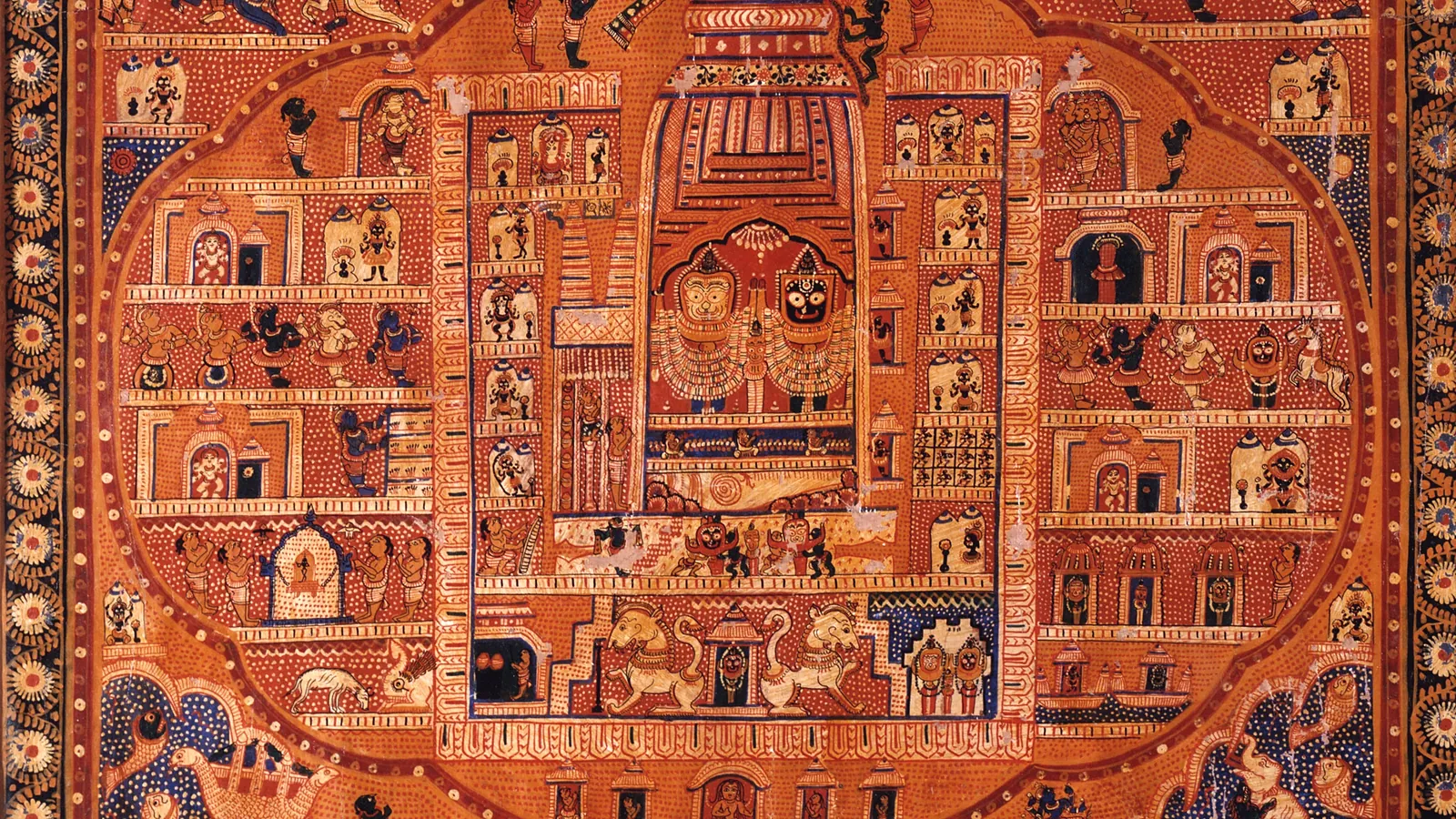
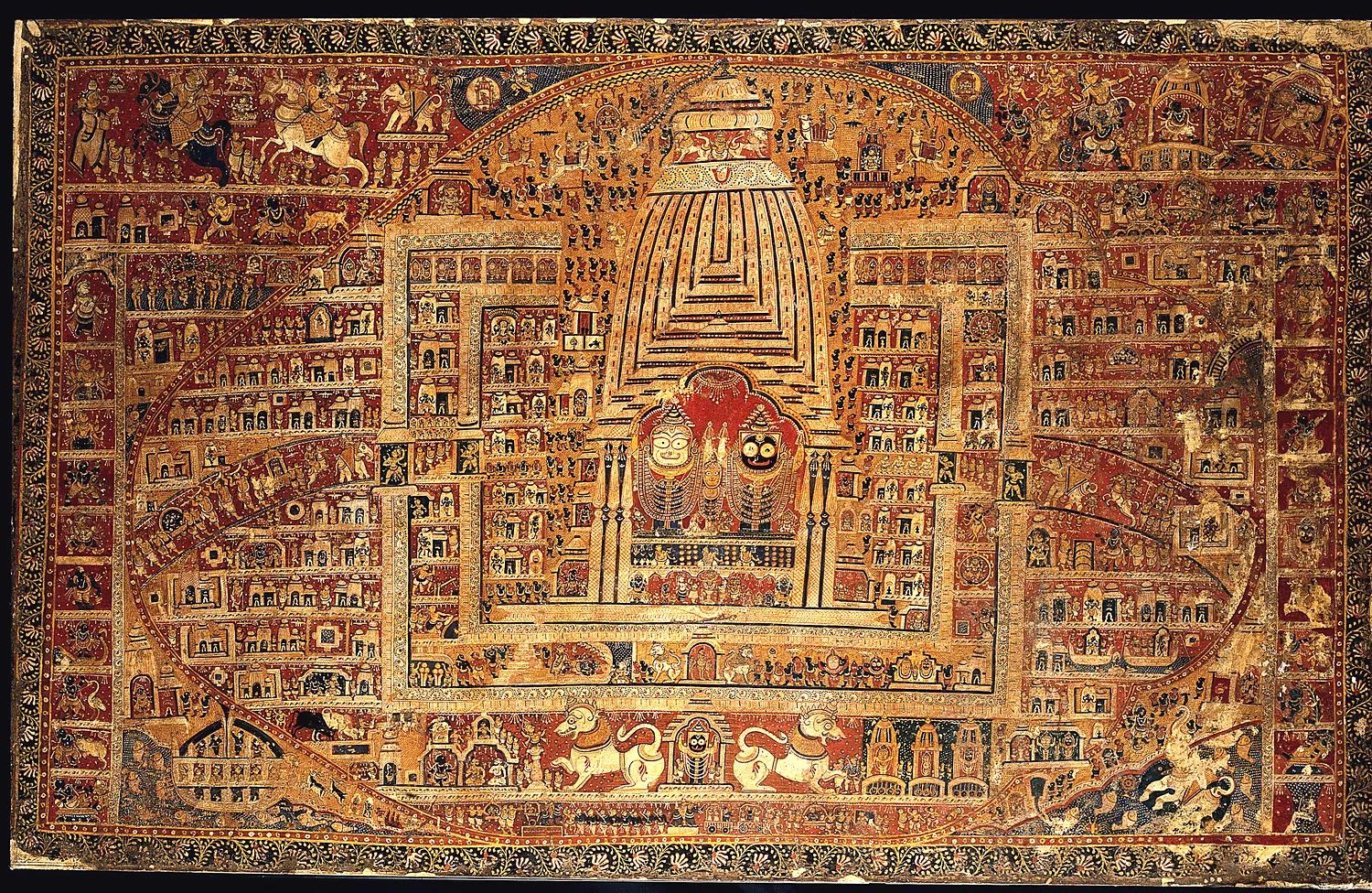
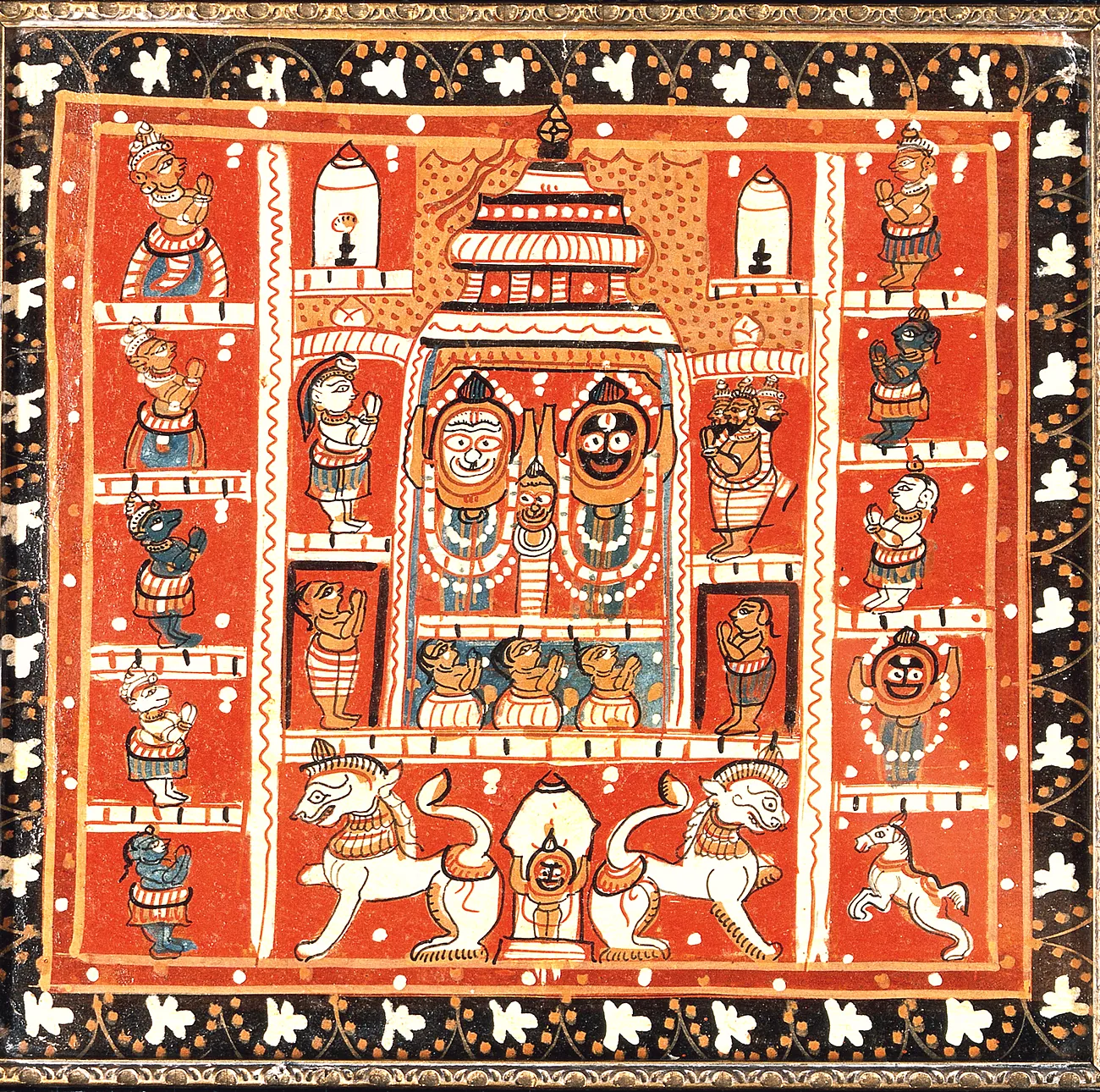
The temple runs what is said to be the largest kitchen in the world. Rice, dāl and vegetables are cooked in earthen pots stacked in towers over wood fires, and the food is offered to Jagannātha in the main sanctum. At that point it is bhoga, the god’s meal, and it becomes mahāprasāda only after it has been carried to Vimalā’s shrine and offered to her there. Only then does it go out to the pilgrims and into the Ānanda Bāzār to be sold and eaten.
I could not source this rule to any text. The forty-nine chapters of the Skanda Purāṇa’s Puruṣottama-kṣetra-māhātmya contain none about Vimalā. The Nīlādri Mahodaya and the Mādaḷā Pāñji I could not obtain. The temple’s Record of Rights is a real statutory document prepared under the 1952 Administration Act and is not published anywhere I could reach.
Three nights a year she eats meat
The Jagannātha temple is strictly vegetarian. During Durgā Pūjā, on the seventh, eighth and ninth days of the bright fortnight of Āśvina, goats are sacrificed near the Bakula Piṇḍi beside her shrine, and fish from the Mārkaṇḍa tank are cooked by Tantric rite and offered to her at midnight, after the deities have been put to bed and the doors are shut.
Śrīnibāsa Tripāthy, writing in the Orissa Review, describes one he-goat. OrissaPost reports two a day across the three days, six in all, contributed by six different maṭhas. The rest of the year she is called Kaibalya Bhojinī Vaiṣṇavī and takes only what comes off Jagannātha’s plate.
What the name means
Vimalā is vi plus mala, without stain. It is a plain adjective and the texts that name her do not explain why she has it.
What she does to a planet in her aṁśa
A planet in Vimalā’s aṁśa does not keep its own results, and passes them on.
The Sun here gives authority that operates through someone else’s office. Your father is often a man whose position was real but derived, or you hold a post where the seal is yours and the decision isn’t. A Sun in this aṁśa can run an institution for years without ever being called its head.
The Moon takes on whatever passes through it. The mind here is a conduit for other people’s states, and you’ll report the household’s mood before your own without noticing you’ve done it.
Mars defends a boundary that belongs to someone else. You’ll fight your institution’s battles, your brother’s battles, your employer’s battles, with real courage, and then find the settlement signed by other people. Mars here is also the strongest version of the aṁśa in the air signs.
Mercury makes everything you say a relay. You translate and you broker, carrying the message between two parties who can’t speak to each other.
Jupiter teaches what he received. A Jupiter in Vimalā’s aṁśa transmits a lineage faithfully and adds little. Where this Jupiter goes wrong is when you start claiming the teaching as your own discovery.
Venus gives beauty in service. You make things lovely for other people’s occasions and you’re often the reason an event, a house or a marriage worked at all. Venus here also marks a spouse who arrives already carrying obligations, and you take those on with the marriage.
Saturn sits in a single vimśāṁśa aṁśa for about twelve and a half days in direct motion and can worry at it for months with retrogression, and in this aṁśa he makes a career out of being the necessary intermediate step, for decades.
Ketu in Vimalā’s aṁśa detaches from the credit entirely and often from the result as well, and here you don’t want your name on it.
Rāhu wants the credit and this aṁśa won’t give it, and the tension shows up as a career of near-misses in public recognition. You’ll take the intermediary position deliberately because it sits close to power.
The lagna in this aṁśa gives a life organised around other people’s arrivals and departures. The ascendant crosses the aṁśa in six minutes, so be certain of your birth time before you read anything into it.
The aṁśa is 7°30′ to 9°00′ of every odd sign, which is 9° of the zodiac in total, or 2.50% of it. About one planet in forty sits here. A transiting Sun crosses in a day and a half, the Moon in two hours and forty minutes, Jupiter in seven days and Saturn in twelve and a half.
Her window in each of the six signs falls wholly inside one nakṣatra pāda, and every one of those pādas belongs to a node. Ketu in the three fire signs, Rāhu in the three air signs.
When she holds a kāraka
The kārakas are the planets ranked by degree within their sign, and the ātmakāraka is the one at the highest degree, so it is uncommon this low in a sign.
Ātmakāraka in Vimalā’s aṁśa
When it does happen, the soul’s business this life is transmission, carrying something from one generation to the next. You’ll preserve a tradition or raise somebody else’s child, and you’ll say plainly that your own life wasn’t the subject.
An AK here fights its own placement for about half the life. The fight looks like trying to be original, and it usually produces work you later disown.
Amātyakāraka in Vimalā’s aṁśa
The AmK is the career and the counsel, and in Vimalā’s aṁśa the career is intermediary by design. Second-in-command, chief of staff.
Gnātikāraka in Vimalā’s aṁśa
The GK is the enemy, the obstacle and the illness, and it is common in the low aṁśas. Here the obstacle is being used. Your resources move through you to other people, and the people receiving them don’t register that a transfer took place. In the body this aṁśa shows in what the system fails to absorb, and read a GK here alongside the sixth house before you assume anything.
Dārākāraka in Vimalā’s aṁśa
The spouse arrives with obligations already attached, and the marriage takes them on. In the good version you join a family, a business or a duty that was running before you appeared, and you find your place in it.
How the daśā feels
When the daśā of a planet in Vimalā’s aṁśa runs it does not announce itself. The work that gets done in these years is real and mostly invisible at the time. You finish the period with less visible standing than you started with, and with something structural in place that wasn’t there before, and the recognition, when it comes, comes in a later daśā and gets attributed to that one. Somebody with a claim on you turns up and asks, you say yes, and the years go into it. The mistake is to spend the period demanding credit. It doesn’t come, and the demanding costs you the relationships that would have made the next daśā comfortable.
The practice she asks for
Almost nothing survives for her. I went looking and found one text and no others: a dvādaśanāma stotram, a twelve-name hymn, published on sanskritdocuments.org in clean Devanāgarī. It names Śrīkṣetra, the Nīla hill and her own shrine, so it is about this goddess and not another Vimalā.
The file credits a proofreader and a date, and it contains at least three grammatical slips that a carefully transmitted text would not carry.
prathamāṃ vimalāṃ vidyāt dvitīyāṃ nīlavāsinīm |
tṛtīyāṃ pīṭhanilayāṃ caturthīṃ śrīkṣetranāyikām ||
pañcamīṃ bhairavīṃ vidyāt ṣaṣṭhīṃ jagadadhīśvarīm |
saptamīṃ mahāśaktiṃ ca aṣṭamīṃ prasādātmikām ||
navamīṃ raktavastrāṃ ca daśamīṃ māyāmohinīm |
ekādaśīṃ parāṃ vidyāṃ dvādaśīṃ tripureśvarīm ||“Know the first as Vimalā, the second as She who dwells on the blue hill, the third as She whose seat is the pīṭha, the fourth as the Mistress of Śrīkṣetra; know the fifth as Bhairavī, the sixth as Ruler of the world, the seventh as the Great Power, the eighth as She whose nature is prasāda; the ninth as She clothed in red, the tenth as the Deluder by māyā, the eleventh as the Supreme Knowledge, the twelfth as Tripureśvarī.”
Vimalā Dvādaśanāma Stotram 2 to 4 · as published by sanskritdocuments.org, which names no source text; English mine
The eighth name is prasādātmikā, she whose very nature is prasāda, and the hymn’s closing verse says the merit of remembering the names equals the merit of mahāprasāda itself.
For a planet in her aṁśa, cook and feed people, and do it without your name on it. Feed at a temple, feed whoever is nearest and hungriest, and do not photograph it. If you want a recitation as well, use the twelve names above, with the caveat about the text attached, or read the Devī Māhātmya, which is public and needs no initiation. Anything requiring dīkṣā is not something to pick up from a web page, and that includes every bīja I have not printed. If your chart is the reason you are reading this, a consultation is where that gets worked out properly.
Questions people ask
What degrees does Vimalā rule in the D20 chart?
7°30′ to 9°00′ of Aries, Gemini, Leo, Libra, Sagittarius and Aquarius. She is aṁśa 6 of the odd column.
Did Satī’s navel really fall at Puri?
The verse usually quoted for that assigns the navel to Virajā-kṣetra, which Sircar identifies as Jajpur, not Puri. The one list that names Puri unambiguously calls it a secondary pīṭha and gives its relic as ucchiṣṭa, leftover food.
Is Vimalā a Mahāvidyā?
No. She is not one of the ten, and she is not one of the seven Mātṛkās either.
Why is a Śākta goddess inside a Vaiṣṇava temple?
Because Puri was contested ground and the settlement was that both stayed. The temple’s own food practice routes through her, and for three nights a year the strictly vegetarian compound performs animal sacrifice at her shrine after the doors are shut.
My Saturn is at 8° of Libra. Is that hers?
Yes. Check the birth time first, because a vimśāṁśa aṁśa is small, and then read the Saturn paragraph above together with the Svātī pāda, since in Libra this aṁśa is Rāhu’s nakṣatra and Saturn sitting in a nodal pāda for twelve and a half days of transit is a different animal from Saturn in a benefic one.
Which goddess is next in the series?
Satī, aṁśa 7 of the odd signs, 9°00′ to 10°30′. She is the one the whole pīṭha story started with.
Sources: D. C. Sircar, The Śākta Pīṭhas, JRASB XIV (1948), for the Pīṭhanirṇaya and Śivacarita lists, the Index of Pīṭhas and the dating. Pīṭhanirṇaya 13, Devanāgarī as published by greenmesg. Skanda Purāṇa, Puruṣottama-kṣetra-māhātmya, Tagare translation, chapter list only. Vimalā Dvādaśanāma Stotram, sanskritdocuments.org, source text unnamed. S. Tripathy, Orissa Review, September 2009, Government of Odisha. Shree Jagannatha Temple Administration, daily rituals. Shri Jagannath Temple Act 1955. Bṛhat Parāśara Horā Śāstra 6.17 to 21 for the twenty names and 7.4 for the varga assigned to upāsanā.