Vimśāṁśa series · Aṁśa 7, odd signs · Satī · 11 min read
Her name became the English word for a widow burning on a pyre. Every Sanskrit source I can reach has her die by yoga instead.
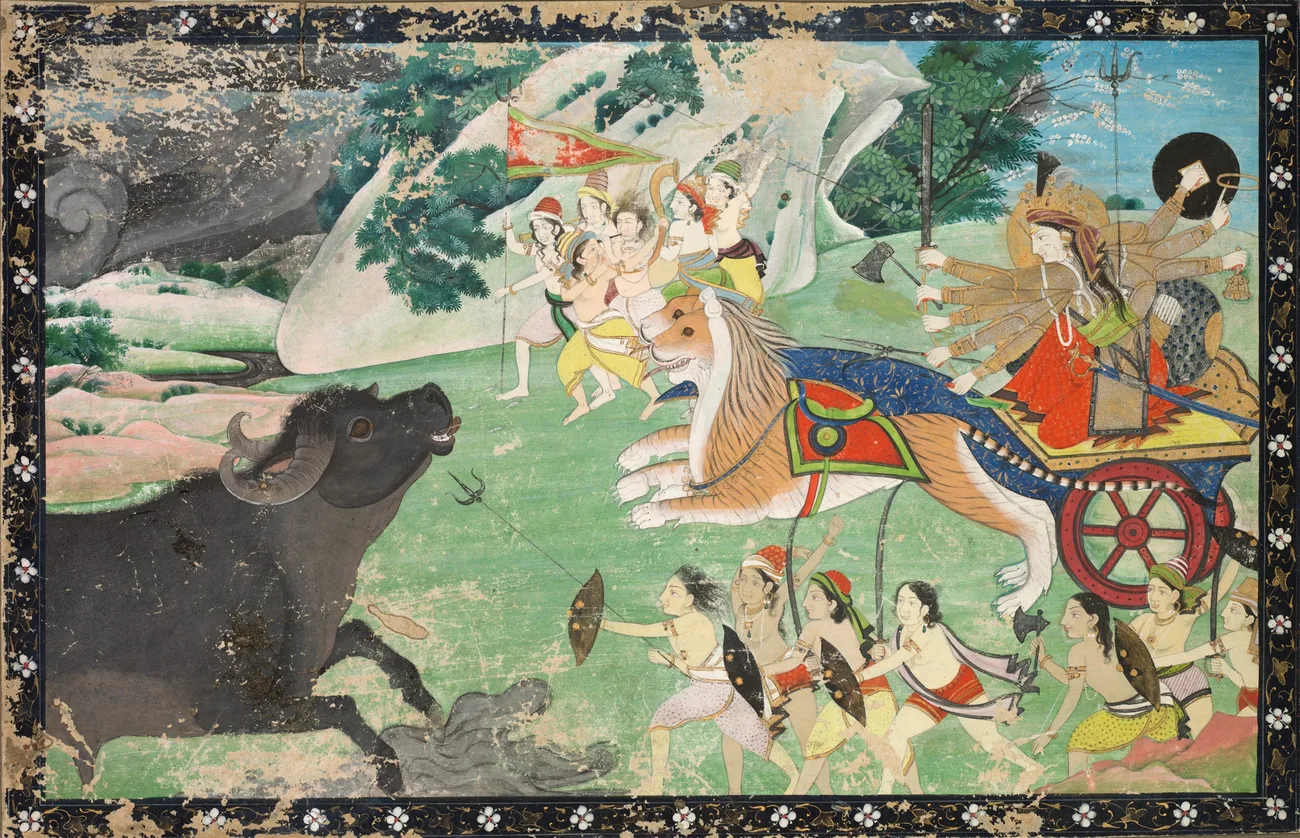
Dakṣa held a sacrifice and invited everyone except his daughter’s husband. She went anyway, without an invitation. Her father would not stand up when she came in. Then he said what he thought of Śiva, in front of the assembly, at length.
Satī holds aṁśa 7 of every odd sign: 9°00′ to 10°30′ of Aries, Gemini, Leo, Libra, Sagittarius and Aquarius. If you have a planet in there, something was handed to you at birth that you didn’t choose, and at some point you put it down.
Part 1 has the full table of forty names. Take your planet’s degrees inside its sign, divide by 1.5, round up. Vimalā holds the ninety minutes directly below her.
What she said before she did it
The fullest version is in the fourth book of the Bhāgavata, chapters 2 to 7. Satī stands in her father’s house and answers him. The answer runs for thirteen verses. Most of it is about Śiva. The last part is about her own body.
अतस् तवोत्पन्नम् इदं कलेवरं न धारयिष्ये शितिकण्ठगर्हिणः।
जग्धस्य मोहाद् धि विशुद्धिम् अन्धसो जुगुप्सितस्योद्धरणं प्रचक्षते॥१८॥atas tavotpannam idaṃ kalevaraṃ na dhārayiṣye śiti-kaṇṭha-garhiṇaḥ |
jagdhasya mohād dhi viśuddhim andhaso jugupsitasyoddharaṇaṃ pracakṣate ||18||“So I will not carry this body, which came from you, the reviler of the blue-throated one. For they say that the cleansing of disgusting food, eaten in delusion, is the bringing of it back up.”
Bhāgavata Purāṇa 4.4.18 · GRETIL e-text
She calls her own body food she ate by mistake. The cure for that, she says, is to bring it up.
Śiva calls her Dākṣāyaṇī, by her father’s clan name, and her smile goes as soon as he does, and she will not keep a body that makes the word true. The verse turns on one word, sudurmanāḥ, out of sorts, and the Sanskrit does not settle whose mood it is. Tagare and the Bhaktivedanta edition both give it to her. Word order gives it to him, and the Kūrma uses the same word of the man doing the insulting.
Then she sits down
She sits on the ground facing north. She touches water and covers herself in yellow silk. She closes her eyes and enters the path of yoga. She balances prāṇa and apāna, lifts udāna from the navel cakra, settles it in the heart, and takes it up through the throat to the point between the brows.
ततः स्वभर्तुश् चरणाम्बुजासवं जगद्गुरोश् चिन्तयती न चापरम्।
ददर्श देहो हतकल्मषः सती सद्यः प्रजज्वाल समाधिजाग्निना॥२७॥tataḥ sva-bhartuś caraṇāmbujāsavaṃ jagad-guroś cintayatī na cāparam |
dadarśa deho hata-kalmaṣaḥ satī sadyaḥ prajajvāla samādhijāgninā ||27||“Then, thinking of the nectar of the lotus feet of her husband, the teacher of the world, and of nothing else, Satī saw her body, its stain destroyed, blaze up at once by the fire born of samādhi.”
Bhāgavata Purāṇa 4.4.27 · GRETIL e-text
Samādhi-ja agni, the fire born of samādhi, starts inside her and burns nothing else in the room.
She never burned on a pyre
The picture in everybody’s head is of a woman throwing herself into the sacrificial fire, and her name is the word English took for the custom, and not one source I can reach says it.
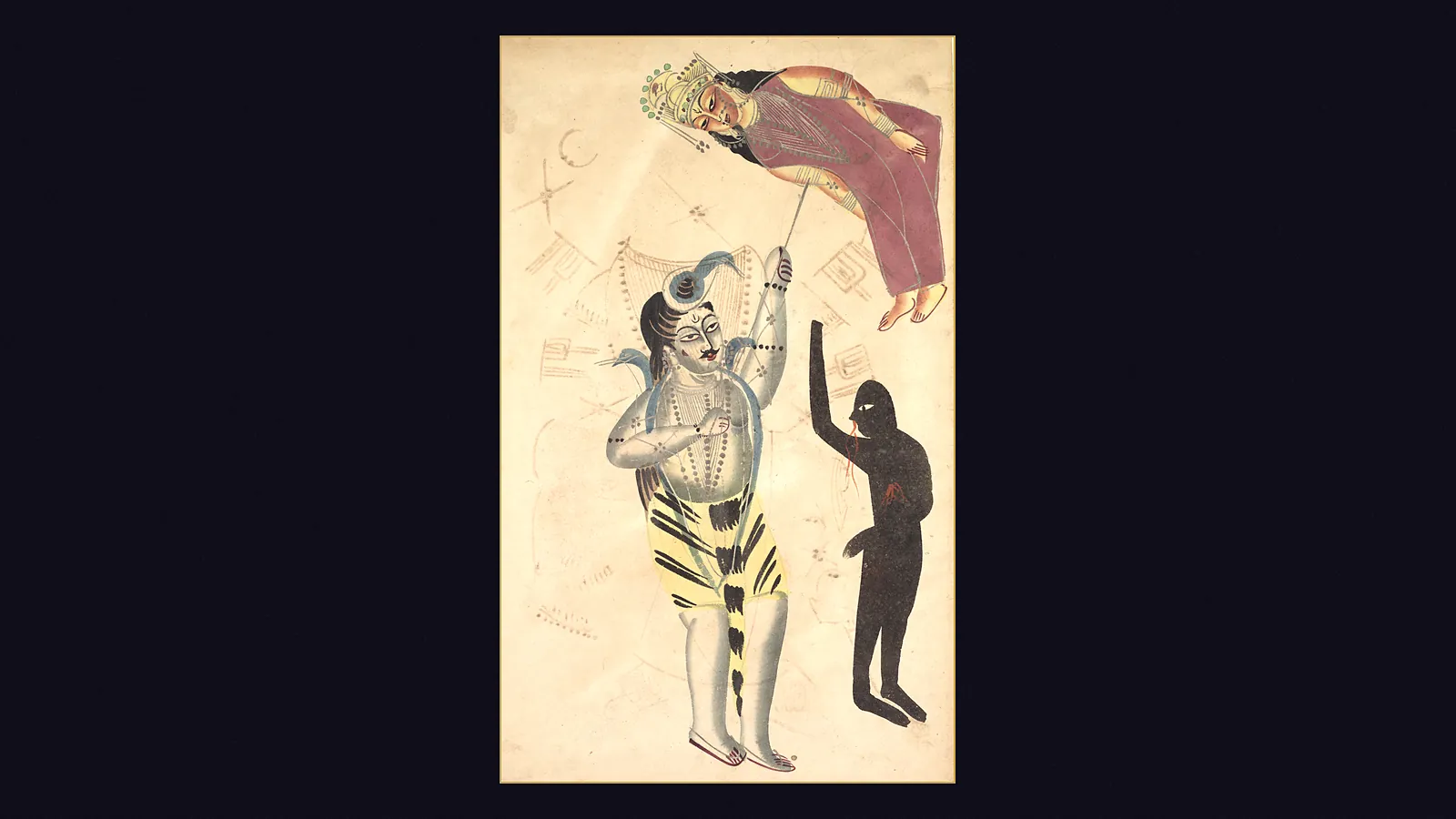
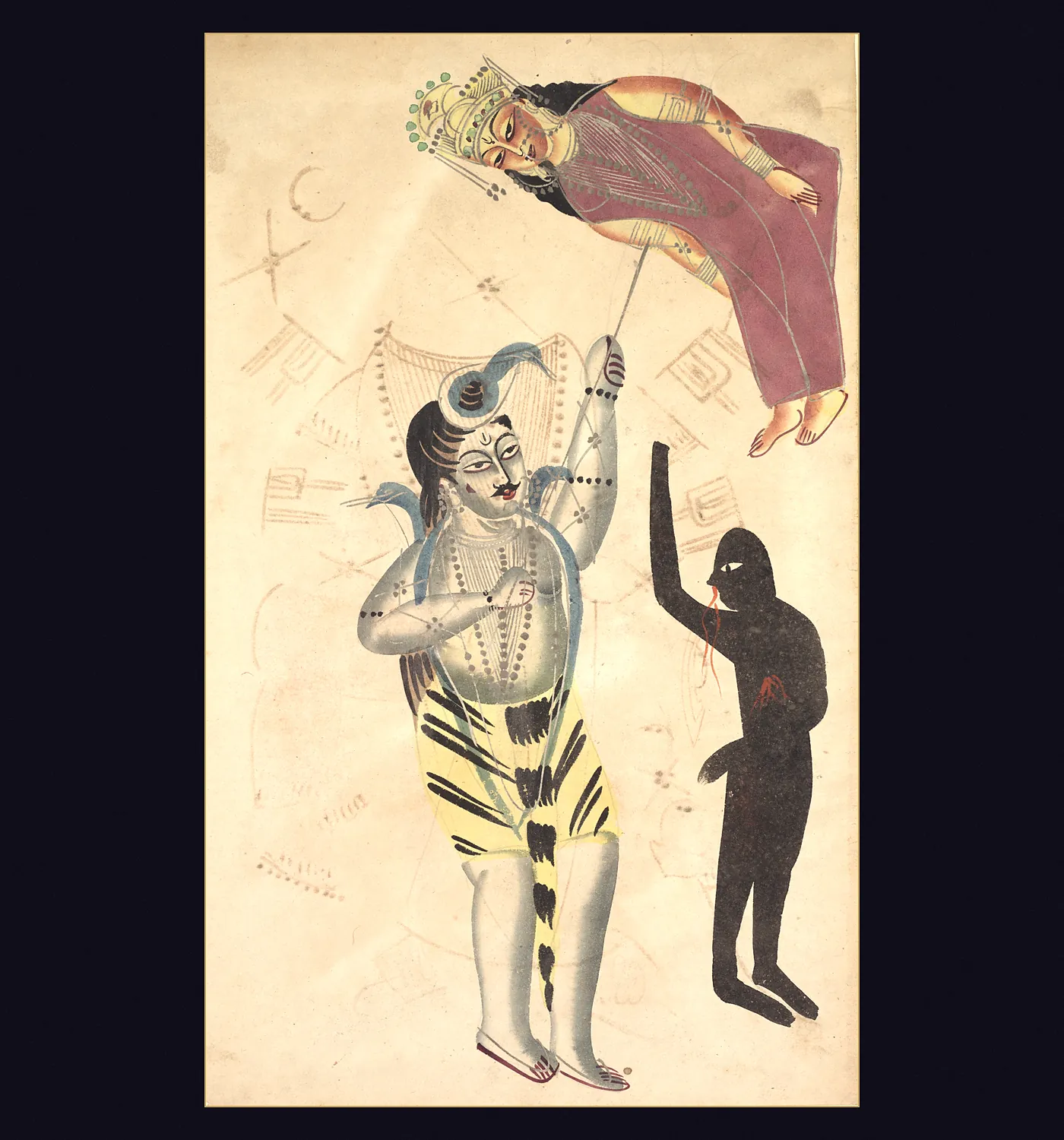
Kālidāsa is the earliest datable witness, and in the Kumārasambhava he gives her one compound: yoga-visṛṣṭa-dehā, her body released by yoga, with no fire in it at all. Sircar, whose survey of the pīṭhas everything below leans on, writes on his fifth page that Kālidāsa says she put herself into fire and perished. The verse does not say that. The Brahmāṇḍa has her hold the āgneyī dhāraṇā, the fire concentration, until the fire rises out of her own limbs; the Vāyu shares that chapter with it word for word, though I read the Brahmāṇḍa and not the Vāyu. The Matsya has her burn herself with the heat born of her own body. The Liṅga ashes the body yogamārgeṇa, by the path of yoga. The Kūrma has her do it at her father’s house, with no sacrifice present at all. The Śiva Purāṇa’s Vāyavīya section has her simply put the body down and walk to the Himālaya. The Kālikā Purāṇa, which I have in translation and not in Sanskrit, has her seal the nine doors of the body and leave by the tenth.
I can’t find who added the pyre.
The Mahābhārata‘s Dakṣa-yajña chapter has no Satī in it at all. Śiva’s wife there is Umā, daughter of the mountain king, alive throughout.
What she does to a planet
Kālī takes away what your planet was leaning on. Gaurī gives it the standing it was refused. Satī makes it put down something it was handed at birth and never asked for.
In that planet’s department of life you inherited a description. A surname, a caste, a father’s profession. A lineage you were trained in, a house you were born into, a diagnosis that ran in the family. For most of the life the planet carries it and works around it. Then the daśā arrives and the planet sets it down, and nobody takes it away, and nothing forces the issue, so the decision is yours.
She sat down and closed her eyes. The assembly only noticed when it was finished. The clients I have with this placement didn’t announce anything, and the family found out afterwards, and the most common sentence in the consultation is that they had been thinking about it for years.
She put down the descent and kept the husband. Three chapters later she is born to Menā in the Himālaya, and the verse after that has her choose the same man again. What gets given up here is the thing you were described by, and the thing you actually wanted usually survives it intact.
The verse that records her giving up the body to stop being Dākṣāyaṇī calls her Dākṣāyaṇī while it does it. Changing the surname doesn’t stop the old one being the true answer to where you came from, and the people in these charts who expect it to are the ones who stay angry.
A planet in her aṁśa is not a warning about your life. What it shows is an inheritance being given up, and in twelve years of charts what that has meant is people leaving family businesses, dropping surnames, walking out of lineages and refusing legacies. If you are in real distress, a chart is not the place to work that out. Talk to a doctor or someone you trust.
Planet by planet
In Aries, Leo and Sagittarius her window sits in a Ketu nakṣatra and the whole thing runs quieter. In Gemini, Libra and Aquarius it’s Rāhu’s, and it runs hot.
| Planet in aṁśa 7, odd sign | What was inherited | What the daśā puts down |
|---|---|---|
| Sun | The father’s name, position or trade | Her most literal placement. The family business is left, the seat is declined, the surname goes. Often while the father is alive and watching. |
| Moon | The mother’s temperament, worn as your own | A mood you thought was your character turns out to have been hers. The daśā is when you stop running it. |
| Mars | A quarrel that was handed down | He stops fighting somebody else’s war. The relatives who inherited it with him call it desertion for about a decade. |
| Mercury | The name on the paper | The most practical version. Legal name changes, pen names, a practice built under something that isn’t the family’s. |
| Jupiter | A lineage, a guru, a school of thought | He leaves the paramparā and keeps the subject. The row I see most in teachers. |
| Venus | The family that came with the marriage | Not a divorce placement. The household is left and the spouse comes along. The Bhāgavata gives this answer outright. |
| Saturn | A duty nobody else would take | Twelve and a half days to cross in direct motion, and some two months inside her, spread across about nine months, if he stations in there. He carries it for decades, puts it down once, and never picks it up again. |
| Rāhu | What the family had, or was owed | The legacy arrives and turns out to be worth less than the wait. The bad version keeps it and can never quite call it his. |
| Ketu | Nothing, because Ketu never wanted it | He’s at home here, and in the fire signs he’s in his own nakṣatra as well. Easiest of the ten, heavily mokṣa-leaning. |
| Lagna | The whole description: family, place, language, caste | A life spent becoming unclassifiable. The ascendant crosses her ninety minutes in about six minutes of clock time, so rectify the birth time before you read a word of this. |
Every chart on my shelf with the Sun in her aṁśa has a father who said something in public, and in most of them the person can still quote it.
Her window breaks in two. A pāda boundary falls at 10°00′, which is one degree into a ninety-minute window, so two thirds of her aṁśa sits in one pāda and one third in the next. It lands at 10°00′ in all six signs, because a sign holds exactly nine pādas and every sign starts on a multiple of thirty degrees, so the pāda grid repeats identically from each sign’s opening. Eight of the twenty aṁśas break like this and two of those cross a whole nakṣatra. Hers doesn’t, so a planet on either side of 10°00′ is still on a node, and I don’t have enough charts on both sides to tell you they read differently.
When she holds a kāraka
Parāśara ranks the kārakas by degrees, highest first, so the Ātmakāraka holds the highest in the chart and the Dārākāraka the lowest. At 9°00′ to 10°30′ she sits about a third of the way up a sign, which puts a planet in her aṁśa in the middle and lower ranks. On the arithmetic alone the commonest is the Putrakāraka, and I have too few of those on file to write about.
Dārākāraka in her aṁśa
The spouse arrives from outside the arrangement the family had in mind, and the marriage costs you the arrangement. What I see is one hard year and then thirty quiet ones, and the people who were going to disapprove get over it slowly and separately.
What doesn’t hold is the position in the family, and clients with this placement keep trying to get both, and the chart will give them one.
Gnātikāraka in her aṁśa
The kāraka of rivals, disease, debt and litigation, and here the rival is a relative and the litigation is about an inheritance. It settles by one side walking away from the asset, and your side is usually the one that walks.
In the body, read it with the sixth house before you conclude anything.
Ātmakāraka in her aṁśa
Uncommon, because it needs every other chara kāraka under her degree. These are the people who are the last of something and know it early.
Inside the daśā
The first half is long and you spend it carrying the thing, usually well, usually with everyone’s approval, and the resentment is quiet enough that you don’t call it that.
Then one decision, and it takes a day. From inside it doesn’t feel like a decision, because the arithmetic was finished years earlier and the day is only when the arithmetic got acted on. Afterwards you are simply lighter, and a certain number of people stop calling. What comes back arrives in the next daśā, on its own terms.
What she asks for
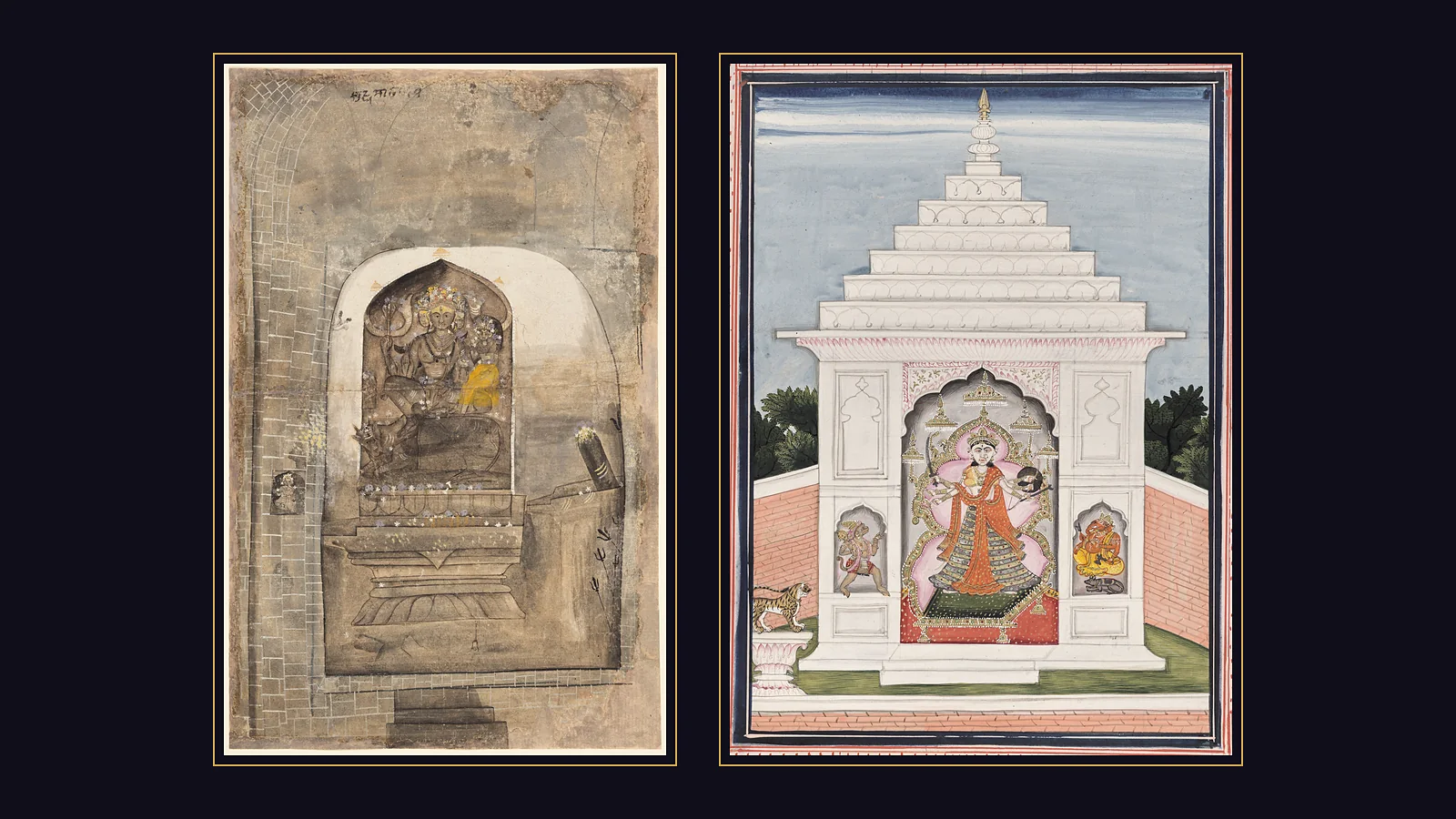
She has almost no upāsanā of her own, because the tradition worships her forward. She is Pārvatī after the rebirth, and she is the goddess of whichever pīṭha the later texts put her in, and there’s no Satī cult standing apart from those.
So the practice for this aṁśa is the Lalitā Sahasranāma, which names her twice, two hundred and twenty-two names apart. She’s Dākṣāyaṇī at 598, the daughter of Dakṣa Prajāpati. She’s Satī at 820, and the gloss there has nothing to do with fathers or fire: sat is being, and satī is the one who is real.
Past that, Umā-Maheśvara, the two of them together, because the Bhāgavata’s own ending is that she comes back and chooses him again. None of it needs initiation.
Do not do it in an argument. She spent thirteen verses answering her father and the answer changed nothing, and what actually ended it was her sitting down in silence. In these charts the decision holds when it’s made quietly.
Questions people ask
Which degrees are Satī’s in the D20?
9°00′ to 10°30′ of Aries, Gemini, Leo, Libra, Sagittarius and Aquarius, which is aṁśa 7 of every odd sign. Aṁśa 7 of the even signs belongs to Bālā.
Did Satī burn herself on a pyre?
Not in any source I can reach. Kālidāsa, the Brahmāṇḍa, the Matsya, the Kūrma, the Liṅga, the Bhāgavata, the Devī Bhāgavata and the Śiva Purāṇa all have her leave the body by yoga, and two of them put no fire in the scene at all. The Kālikā Purāṇa agrees, in the translation I have.
Why isn’t the dismemberment in the Bhāgavata?
Because the Bhāgavata has no pīṭha story anywhere in twelve books, and the word pīṭha occurs eleven times in the whole text, meaning a footstool, a seat, or a demon of that name. The oldest of these lists I can find is in the Matsya, a hundred and eight places, but there Satī recites it herself while she is alive and the text calls them tīrthas. The Devī Bhāgavata reproduces that list almost word for word and relabels it as her limbs. The oldest actual dismemberment I can find is in the Kālikā Purāṇa, tenth or eleventh century, and it names seven pieces, not the fifty-one everybody quotes, and no discus. As for the fifty-one, D. C. Sircar traced it to a seventeenth-century Bengali compendium, the Tantrasāra, which recognised fifty seats and then split one of them, Merugiri, into Meru and Giri.
Is a planet in her aṁśa a bad placement?
No, and the myth misleads people here. The people I have on file with it are lighter afterwards, not damaged.
My Sun is at 10° of Leo. Is that hers?
Yes, and that one is sitting exactly on the seam. 10°00′ is where Maghā’s third pāda ends and the fourth begins, and it sits two thirds of the way through her window. Check your birth time to the minute before you build anything on it, then read the Sun row above.
Where does this reading come from?
No classical text explains what a vimśāṁśa deity does to a planet. Parāśara names the twenty and assigns the varga to upāsanā. The commentaries stop there. What’s here comes out of her own story in the Bhāgavata and the other Purāṇas, and out of charts.
Next in the series is Tārā, aṁśa 8 of the odd signs. Part 1, with the full table of all forty names, is here. If you want your own vimśāṁśa read properly, with the deity and the daśā sequence together, that’s what a consultation is for.
Sources: Bhāgavata Purāṇa 4.2 to 4.7, GRETIL e-text, which serves IAST; the Devanāgarī printed here is a mechanical transliteration of it and not a separate witness. Kālidāsa, Kumārasambhava 1.21; Brahmāṇḍa Purāṇa 1.2.13.57 to 61, which the Vāyu Purāṇa shares verbatim; Matsya Purāṇa 13; Kūrma Purāṇa 1.13 in the GRETIL numbering, 1.14 in Tagare’s; Liṅga Purāṇa 1.99.16; Śiva Purāṇa 7.1.18; Mahābhārata 12.274; all GRETIL. Devī Bhāgavata Purāṇa 7.30, Devanāgarī from satsangdhara.net. Kālikā Purāṇa 16 and 18 from B. N. Shastri’s translation, the Sanskrit of that edition being unreadable in the available scan. D. C. Sircar, The Śākta Pīṭhas, JRASB XIV (1948), for the dating of the Kālikā Purāṇa and for the Tantrasāra’s arithmetic. Lalitā Sahasranāma names 598 and 820. Bṛhat Parāśara Horā Śāstra 6.17 to 21 for the twenty names, 7.4 for the varga assigned to upāsanā and chapter 32 for the kārakas.